

How to Wire a Bath Fan to Plug Into an Outlet

Bath fans are compact and durable appliances designed to vent damp areas. If you're considering using a bath fan in an application other than a bathroom, like ventilating a work area or a damp basement, you may want to retrofit the fan so that it can be plugged into a wall outlet. With some easy-to-obtain materials and a little bit of work, you'll find that the job can be done in just a short while.
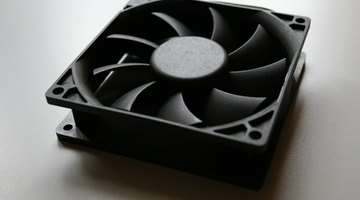
-
Cut an electrical extension cord with the wire cutters to the proper length for your needs, taking into account how far your fan will be from the electrical outlet you plan to use. Leave the male plug -- the part that goes into the wall outlet -- on the wire.
-
Pull apart the extension cord's two insulated wires. Insert each wire into your wire stripper, 1/2 inch from the end. Pull the wire stripper toward the cut end of the wire to remove 1/2 inch of the insulation.
-
Insert the ends of the two wires that are connected to the bath fan into your wire stripper. Remove 1/2 inch of insulation from the end of each wire, using the same technique as before.
-
Pair the stripped ends of one wire from the extension cord and one wire from the bath fan. Put a wire connector over the paired ends. Hold the wires and twist the wire connector clockwise until it is tightly fastened on the wires. Wrap a piece of electrical tape around the base of the wire connector and the wires leading into it for further secure the connection.
-
Repeat Step 4 with the remaining two wires.
-
Plug the fan into the outlet to test its operation.
References
- "Wiring 1-2-3;" The Home Depot; 2005
Warnings
- Don't plug in the fan until you've completely finished the installation.
- Choose an extension cord with the same electrical rating as the wires on the bathroom fan.
Writer Bio
Based in Virginia, Nichole Liandi has been a freelance writer since 2005. Her articles have appeared on various print and online publications. Liandi has traveled extensively in Europe and East Asia and incorporates her experiences into her articles. She holds a Bachelor of Arts in history from West Virginia University.
Photo Credits
- fan image by Antons Matvejevs from Fotolia.com
More Articles

