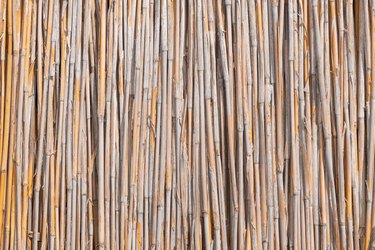
Bamboo (subfamily Bambusoideae) is a member of the grass family (Poaceae). Hardy in U.S. Department of Agriculture plant hardiness zones 4 through 12 (depending on species and cultivar), the stems, or culms, of this tree-like grass are only suitable for long-term use when they have been properly dried. The high water content of bamboo allows it to rapidly decompose, host fungi and be eaten by insects if it is not first cured. Three common methods used to dry bamboo are heat drying, air drying and — counterintuitively — soaking in water.
Harvesting Bamboo Culms
Video of the Day
Regardless of which drying method is used, the bamboo should be properly harvested so that it doesn't split during the drying process. Only cut down bamboo stalks, also known as culms, that have been growing for at least three to five years. It takes this long for the plant to fully harden. Once hardened, the bamboo will shrink less when dried, and it will not be as easy for insects to bore into the plant.
Video of the Day
Cut in the fall and winter while the sap is not moving to decrease the chance that the bamboo will split and crack. Any cutting tool can be used, including a chainsaw or reciprocating saw with a fine-toothed blade, but a budget-friendly hacksaw also produces a clean cut. When cutting down the culms, cut the bamboo just above a node to prevent crushing or splitting.
Air Drying the Bamboo
Air drying is the most common method because it is simple and cost-effective. Cut the bamboo culms and store the pieces vertically or horizontally without removing any of the leaves or branches. The large surface area of the leaves and branches gives more area for evaporation of moisture.
Store the vertical stacks of bamboo in a cool and shady area; this allows evaporation to occur slowly enough that cracks and splits do not form. Alternately, store the culms horizontally on racks that allow air circulation around the stacks. Rotate the bamboo every two weeks. This method requires six to 12 weeks to fully dry the bamboo, depending on the size and moisture content of the culms.
Heat Drying the Culms
Bamboo has natural resins, or oils, that can help preserve the canes. Heat sections of newly cut bamboo over red-hot charcoal that has burned down to coals or another heat source that will bring it up to 250 degrees Fahrenheit.
Use a grill with a rack to contain the charcoal and help keep the bamboo several inches away from the hot coals. Monitor closely as you draw the bamboo over the heat to ensure the culm doesn't catch on fire. Be sure to wear heat-resistant gloves and safety goggles to protect your skin and eyes from the hot bamboo culm.
The bamboo's resin will bead on the surface of the heated section where it can be wiped away with a cloth. Bringing resins to the surface helps to seal and preserve the surface while removing internal barriers to moisture removal. Heat one section at a time, because the resins will quickly dry when removed from the heat source.
After the bamboo has changed color to a lighter green or yellow and you've wiped the resin along the length of the culm, set it aside to dry in a rain-protected and well-ventilated area for two weeks. Heat drying is a reliable method for not cracking or splitting the bamboo as it finishes curing.
Soaking Bamboo in Water
Another method for drying bamboo is to first soak the culms in water. Before placing the culms in water, pierce each of the nodes so water can soak into all parts of the bamboo poles.
Completely submerge the bamboo in running water or a tank. Put heavy boards or rocks on top to keep the bamboo submerged and soak for 12 weeks to completely saturate the plants, then place the bamboo in a sunny area to dry. When storing the culms in a tank, change the water weekly to prevent bacterial and algae growth. You can also add borax, boric acid or other preservatives to the water.
Soaking protects the bamboo from insects as it dries, as it leaches out starches that the insects would normally eat. It also saturates the plant with water, evening out the moisture content, so, as the bamboo dries, the water evaporates evenly and slowly, which can prevent cracking and splitting even in hotter weather.