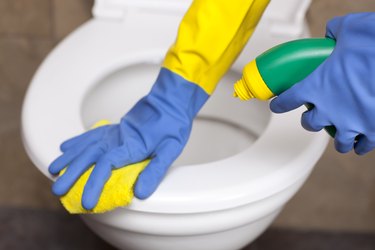
It may not be the most enjoyable household task, but cleaning the toilet properly is important. Not only will this keep your bathroom looking its best but it will prevent bacteria from building up inside the bowl. If you're dealing with stains in your toilet bowl, you'll want to make sure you know the right way to tackle them. Learn how to identify the most common types of stains and, most importantly, how to get rid of them.
How to Remove Everyday Stains
Video of the Day
For everyday grime (the kind that builds up if you haven't cleaned your toilet in a while), cleanup is simple. Put on your rubber gloves, get out your toilet bowl cleaner, and spray the cleaner under the rim and in the bowl. Let the cleaner sit for at least 10 minutes and then scrub everything thoroughly. Flush the toilet.
Video of the Day
If this doesn't do the trick, you're likely dealing with stains caused by either mold, mildew, hard water, or minerals in the water.
How to Remove Mold and Mildew
If you see mold and/or mildew growing in your toilet, it's important to get rid of the fungus immediately. Mold can become a health risk if left unchecked. To remove mold from under the toilet bowl rim, you can use either bleach, undiluted white vinegar, or hydrogen peroxide.
If you are using vinegar, pour a cup of vinegar into the bowl and let it sit for a couple hours. Then, scrub with more vinegar as needed. Let the toilet sit for about 20 minutes and then flush it. Allow your toilet to sit unused for a few hours if possible.
To clean off the mold with bleach, fill a spray bottle with one part bleach and 10 parts water. Spray the solution into the toilet water and around the bowl. If you are using hydrogen peroxide, pour a cup of it into the bowl and use a brush to scrub everything, taking care to get under the rim. Let everything sit for 15 minutes or more before flushing.
How to Clean Mineral and Rust Stains
Do you see brown, reddish, or gray stains in your toilet? If so, this is most likely caused by hard water or minerals in the water. To get rid of rust stains in your toilet, you'll need the heavy-duty stuff, such as a cleaning product with diluted hydrochloric acid (check your local hardware store). Just be sure to scrub with a toilet brush that has nylon bristles (not wire bristles) and never mix bleach with diluted hydrochloric acid.
Those who prefer their cleaning solutions to be on the DIY side can try using vinegar instead. Pour the vinegar into the toilet bowl and let it sit for at least three to four hours. Finish by scrubbing the bowl and use more vinegar if needed. You can also use a pumice stone rather than a brush if you'd like.