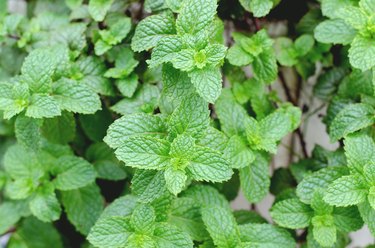
Lemon balm (Melissa officinalis) is a perennial herb in the mint family that is native to central and southern Europe, western Asia and northern Africa and is now naturalized in North America. It's also grown as a perennial ornamental plant for shade and rock gardens in U.S. Department of Agriculture plant hardiness zones 3 through 7. The leaves have a lemon-like fragrance and flavor and are used in cooking and to make natural fragrances and cosmetics.
A Bit of Botany
Video of the Day
Lemon balm leaves contain several organic compounds that are responsible for its aromatic qualities and flavor profile, namely, citral, citronellal, linalool and geraniol. Because the pheromone produced in a gland of the honeybee also contains some of these chemicals, honeybees have a special affinity for this plant. Its genus name of Melissa, which is the Greek word for "bee," is a reference this attraction.
Video of the Day
In the Landscape
Lemon balm is a traditional favorite in many kinds of gardens, including kitchen herb, tea, bee-loving and cottage-themed gardens. Due to its low-growing, sprawling nature, it's often used in hillside rock gardens and as edging along walls. The plant is also suitable for use in mixed borders and as a natural ground cover under trees.
On the downside, lemon balm readily self-seeds and can become invasive, taking over areas in your garden. It also spreads by rhizomes, which creep along the ground. To control its spread, pinch off the flowers with your fingers or prune them with pruning shears to prevent the plant from going to seed, and consider growing lemon balm in a large container to confine its growth.
In the Kitchen
Like other mints, lemon balm lends a bright, minty, refreshing flavor to teas, whether used fresh or dried. The leaves are also used to flavor wines and liquors. Lemon balm is a key ingredient in Carmelite Water, a 17th-century recipe created by Carmelite monks that doubles as a cordial and cologne. The herb is also a flavoring agent in Chartreuse and Benedictine liquors.
In cooking, lemon balm is added to salads, vegetable dishes and sauces. It's also used to lend lemony flavor to herbal butters, vinegars, cheese spreads, salad dressings, ice cream and cookies and other baked goods. Heat tends to diminish the flavor of lemon balm when it's added to cooked foods, so add it near the end of cooking time.
Lemon Balm Household Uses
Freshly picked lemon balm leaves can be used to polish shoes. They can also be used to polish wood, but most people find this impractical. Instead, the herb is usually infused in linseed or olive oil to make a natural furniture polish.
Prepared as a strong infusion, or tea, lemon balm is used to make natural hydrosols, perfumes, skin creams and other cosmetics. The dried herb is used in potpourri mixtures, herbal pillows, bath bags and linen sachets.
From Garden to Table
The easiest way to harvest lemon balm is to snap leaves off stems with your fingers as often as needed for cooking or other purposes. The collected leaves can be used fresh or hung upside down to air-dry for later use. The dried herbs lose a lot of flavor, so if you're using it for food, fresh is usually best. If you have a lot of lemon balm, consider removing stems at least once during the growing season to increase air flow around the plants.
If you want to harvest large portions of lemon balm at one time, cut back the plants by one-third in midsummer or early fall. Rest assured that this plant is extremely resilient and will easily rebound no matter how much or how often you harvest it.
For best flavor and scent, harvest the plant before it flowers, because this is when the concentration of volatile oils is the highest. In terms of timing, this translates to August or September. Oil concentration also tends to peak in the morning hours.