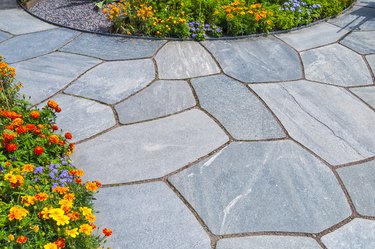
How To Lay Slate Tile Outside

How To Lay Slate Tile Outside thumbnail
Finished slate step over concrete installation

Slate is a shale type sedimentary rock that is often made of clay and volcanic ash. This rock splits easily into sheets which is why it has been historically used for roofing and outdoor applications. The color range of this rock has made it enormously popular for both indoor and outdoor use. For an outdoor patio or step, slate is often a good choice since it has natural texture which reduces slip, it has varied color which enhances its natural appeal and it is reasonably durable if installed properly. Slate tiles can be challenging because tiles can vary in dimension with one side of a tile thin and the other end thick. Slate tile, as in this project, should be laid over an existing surface. We laid ours over concrete. Does this Spark an idea?

Things You'll Need

  • Slate (with at least 10 percent overage)
  • Face mask, gloves and safety glasses
  • Pre-mixed mortar (can be color tinted)
  • 5-gallon bucket (optional, for use with the mixing rod and drill combination)
  • Grout/mortar mixer (optional, long rod that attaches to a drill)
  • Mortar hoe (optional, can be used with a wheelbarrow or large pan/basin style bucket - the hoe needs a wide/flat pan to work the mortar)
  • Mortar tray
  • An old paint brush
  • Small water tubs (we used two)
  • Running water nearby
  • ¾-inch notched trowel
  • At least two large sponges
  • Level
  • Spacers (we used 3/8-inch)
  • Tape measure
  • Wet saw tile cutter (this can be rented)
  • Plastic sheeting
  • Tile bag (cone shaped bag for squeezing grout)
  • Sanded grout (can be color tinted)
  • 4-inch putty knife and optional 1-inch putty knife for small areas
  • A rubber grout float (this may be optional but they are inexpensive)
Show More

Instructions

  1. Laying Slate Outside

    • 1

      Sort out your tile for color, thickness and unfortunately for breakage. Slate is a bit more problematic than manufactured tiles. When choosing where to start a tile project it is helpful to keep in mind where it shows and where it hides. This means that lead or prominent edges are more visible or show more so you will want to use whole tiles at show edges and cut at less prominent edges. Lay out a few tiles (with joint allowance) to see how they fit on your concrete. If you are using a pattern, dry fit a few rows as well. Many people prefer to lay their whole tiles first and cut tiles last. Once you have your fit and your start point, be sure to clean your concrete thoroughly. (Power wash if necessary.)

    • 2

      Mix your mortar using the five-gallon bucket, mixer rod and drill, or using the mortar hoe and wheelbarrow/tray. Wear a face mask, gloves and safety glasses. Your mortar should be moist but not runny. Only mix one-fourth of the bag at a time until you know how fast you will use it as it will dry out. Use a mortar tray or small plastic basin that is longer than your notched trowel. Use your paintbrush to wet down the area of concrete you are working on (keep the surface slightly moist). One small bucket should be kept with clean water while the other is used to moisten mortar or clean up. One sponge should be kept clean as well for the same reasons.

    • 3
      Mortared slate before grouting.

      Apply the mortar using the ¾-inch notched trowel. Spread it evenly across the space of one or two tiles at a time. Select your tile and moisten it with a damp sponge. Slate tiles can be very uneven so you may need more mortar on one end. Check the relative level of the stone. Wiggle the tiles to settle them into the mortar and make slight height/level adjustments.

    • 4

      Add spacers between tiles. Install your whole tiles being sure to vary your colors to achieve the proper slate effect. Try to make sure you don't have very uneven tiles as these look bad and may cause tripping.

    • 5

      Measure and cut tiles using your wet saw. It is best to do all of your cuts at once to reduce costs if you are renting a machine. Lay all of your tile. On jobs too large for a single day you may want to cut the second day. At the end of each day of laying tile, mist down your tile and concrete with water and cover with plastic sheeting to raise the humidity and improve adhesion of the mortar and grout.

    • 6
      After grouting, the stone is wet from cleaning.

      Use a sanded grout for outside applications to improve anti-slip properties. We found we needed to resift some of our grout because it had grout stones (small bits that got moist somewhere in handling). A kitchen-type flour sifter worked well. We opted for using a tile bag rather than a float because of the high texture of our stone and the depth of our tiles. Wearing a mask, mix your grout until it resembles cake frosting. This tends to be more moist than mortar. Mix enough to fill your bag three-quarters full.

    • 7
      Close-up of corner work. Cut edges are kept at the back of the tread.

      Moisten the tiles and edges you are working with a wet sponge. Remove spacers. Squeeze grout between your tiles doing one to two tiles before tamping the grout in, running your finger along for a nice shallow dip and cleaning off the surface with your cleaning sponge and clean water (it will get dirty fast). You can also use a putty knife to press grout into deeper areas, such as where steps meet walls. Complete all sections of one area before moving to the next, cleaning as you go. When you are finished, lightly mist your finished project, cover with plastic sheeting for 24 hours to allow for a slow and more even curing of the grout.

Tips & Warnings

  • Keep your slate tiles level. Clean your tools, pans, buckets and sponges immediately as mortar and grout become stone-like when they harden. Clean buckets and mixers BEFORE and in between mixing the next batch. It is often helpful to have a second person managing the clean-up and mixing of new batches of mortar and grout as these can take nearly as long as the actual tile work. Clean off sloppy mortar and grout as you go. Don't wait for later or you will have haze or hardened clumps that add to your labor.

  • Sanded grout is hard on your hands. We opted to squeeze grout between the tiles and tamp down using our fingertips. At the end of eight hours our fingertips were sanded off and raw and our skin felt like plastic. Wearing gloves helped but didn't eliminate the problem. The experts at Construction Solutions recommend: Wear long sleeves and pants, wash clothing between wearings, wash your hands frequently in non-contaminated water, use cleaning products that are pH-neutral and remove gloves properly. Do not do this job on hot or breezy days in full sun. If you have to, consider shading your working area with an awning and have a hose nearby to keep the concrete and slate moist and humid.

Related Searches:

References

  • Photo Credit F.R.R. Mallory et.al.

Comments

You May Also Like

  • How to Lay Slate Flooring

    Due to its durability, slate is a great floor material for heavy traffic areas like entryways and hallways. Because it is slip-proof...

  • How to Lay Outdoor Slate

    Use slate to build an outdoor patio or walkway that will naturally blend with the environment. Slate comes in thin tiles or...

  • How to Lay Tile Outside

    Tiling over concrete patios is becoming more and more popular. One of the reasons for this trend is that people want to...

  • How to Lay a Slate Patio

    Slate is a sedimentary rock that has been used historically for indoor and outdoor purposes. It has a natural look that adds...

  • How to Lay Slate Pavers

    Slate is one of the more expensive building materials for a paver patio, but provides an elegant, sophisticated look. Slate pavers take...

  • Instructions for Laying Slate Tile Outside

    Slate is a durable stone that wears down slowly. This slow wear makes slate effective on floors--especially outdoors, where a combination of...

  • How to Lay Slate Tile on a Concrete Porch

    Laying slate tile on a concrete porch is a similar project to laying it on an interior floor, with the tiles set...

  • How to Install Exterior Slate Tile

    Exterior slate tile gives a beautiful finishing touch to an Italian or hacienda-themed patio garden. Once installed, exterior slate tile requires little...

  • How to Lay a Slate Walkway

    Slate is a durable stone that withstands severe weather and wear and tear. Often chosen for its strength and rustic appeal, slate...

  • How to Install Slate Tile Outside

    Slate tiles are appropriate for outdoor settings like patios or screened porches, because they’re natural stone. But like all tiles, there are...

  • How to Lay Floor Tile Outdoors

    Tiling outdoors can be challenging due to the variables, including weather and temperature. Rain on new tile will damage the mortar and/or...

  • How to Install Outside Tile

    Tile on an outdoor patio or walkway can be an excellent and stylish addition to your exterior decor. With a little planning...

  • How to Lay Outdoor Tile

    Follow these steps for laying outdoor tile and you can build a tile deck or patio yourself.

  • How to Install Tile or Slate Over a Concrete Driveway

    Concrete driveways can be resurfaced with commercial grade tile or slate. It is much more economical than pouring a new concrete driveway...

  • How to Install Slate Tile on Concrete

    Slate tile is an ideal material for resurfacing concrete basement floors or patio decks. Depending on indoor or outdoor installation there are...

  • How to Lay Slate Paving

    Paving with slate is essentially the same as paving with other rock materials. First, you need to properly prepare the foundation that...

  • How to Take Care of Outside Slate Tile

    Slate is used indoors and outside as siding, floors, walkways, and more. Used outdoors, slate tiles give a natural look to a...

  • How to Install Slate Floor Tile Outside

    Slate tile is an elegant look for a porch floor or patio, but it's a good idea to take some precautions before...

Related Ads

Featured