How to Calculate Bolus Insulin for Diabetes

Type 1 Diabetes is a complicated illness that requires sufferers to monitor their diet and exercise, as well as rely on synthetically created insulin to reduce their blood sugar levels. Finding the proper insulin dosage for meals, and to correct high blood sugar levels, doesn't have to be confusing: You can calculate the right doses using some easy formulas.

Things You'll Need

  • Insulin pump
  • Insulin
Show More

Instructions

    • 1

      Determine your basal, or background, insulin dose. Start by calculating your total daily insulin dose. Your basal insulin dose is usually 40 to 50 percent of your total daily insulin dose. An easy formula to figure out your total daily insulin dose is to divide your body weight by four. Make a note of that number. Your basal insulin dose will be half that number. Your basal insulin dose will be delivered by your insulin pump throughout the day.

    • 2

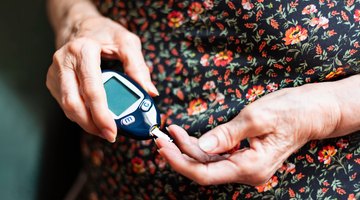
      Use a blood glucose testing meter and testing strips to determine your current blood glucose level. Insert a testing strip into your meter to power it on. Prick your finger to obtain a sample drop of blood. Wait for the meter to to flash "Apply blood" and then apply your blood sample to the strip. After a few seconds, your meter will give you your current blood glucose. Knowing your current blood glucose is crucial to properly calculating your bolus insulin dose.

    • 3

      Calculate your carbohydrate coverage dose. Usually, one unit of fast-acting insulin will counteract between 12 and 15g of carbohydrates. Total the number of carbohydrates for your meal. Divide that number by the grams of carbohydrates counteracted by one unit of fast-acting insulin to find your carbohydrate coverage dose.

    • 4

      Determine your high blood sugar correction dose if your blood glucose level was outside your target range when you tested it in Step 2. Usually, one unit of fast-acting insulin will reduce your blood glucose level by 50. Find the high blood sugar correction dose by subtracting your target blood glucose from your current blood glucose. Divide that number by 50 to find your high blood sugar correction dose.

    • 5

      Add your carbohydrate coverage dose to your high blood sugar correction dose. After adding these doses, administer your bolus insulin dose through your insulin pump.

Tips & Warnings

  • Insulin sensitivity varies by the individual, so you may find that your body needs more or less insulin than what is recommended in this article.

  • The information in this article is not a substitution for professional medical advice. If you have questions about your diabetes treatment, please consult your doctor.

Related Searches:

References

Resources

You May Also Like

  • How to Calculate Bolus

    Bolus is a term associated with diabetes patients that refers to the insulin-to-carbohydrate ratio. Diabetes patients have to take insulin to counteract...

  • How to Convert NPH Insulin to an Insulin Pump

    Insulin pumps deliver two types of insulin dosages: a basal rate, that delivers a low yet constant stream of insulin 24 hours...

  • How to Calculate an Insulin Dosage

    Insulin is important for our bodies to stay healthy and to function efficiently. With diabetes, it is necessary to inject insulin to...

  • How to Use Sliding Scale Insulin

    Diabetics using insulin frequently hear doctors using the term sliding scale insulin. What is sliding scale insulin and how does it work?...

  • How to Calculate Dosage

    Errors in dispensing and administering medication are common, and it is estimated that 2 percent of hospital admissions result in an adverse...

  • How to Calculate Lantus Dosage

    Lantus or Insulin Glargine serves as an effective treatment of Type II diabetes. Insulin is the paramount hormone that converts consumed food...

  • How to Calculate a Diabetic Exchange List in a Recipe

    Diabetic exchange lists can be as simple as counting carbohydrates or as complicated as counting all of the nutrients available to consume....

  • What Is Bolus?

    A bolus is when a drug, medicine or other type of compound is given to an individual in order to increase their...

  • How to Calculate Carbs for Diabetics

    Carbohydrates are a major concern for people with diabetes. Carbohydrates break down into sugar, which increase your blood glucose. For anyone with...

Related Ads

Featured