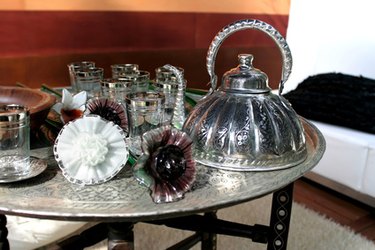
Electroplated nickel and silver, popularly known as EPNS, is a metal used to make utensils and cutlery. A thin layer of silver coats the EPNS utensils or cutlery. Clean EPNS carefully because the thin silver coating is delicate and tends to scratch easily. EPNS also tarnishes easily. Commercial cleaners are also available to clean EPNS.
Step 1
Plug the sink and fill it with warm water.
Video of the Day
Step 2
Add mild dish soap and wash the EPNS cutlery or utensils thoroughly.
Step 3
Run the EPNS through warm water to wash off the soap residue.
Step 4
Take the utensils or cutlery and dry them with paper towels or soft cloth kitchen towels.
Step 5
Drain the soapy water from the sink.
Step 6
Plug the sink again to remove tarnish from the EPNS utensils or cutlery. Place a sheet of aluminum foil at the bottom of the sink.
Step 7
Pour hot water until the sink is half full. Put 1/2 cup of baking soda into the sink and mix with the hot water.
Step 8
Place the utensils or cutlery on the submerged aluminum foil. Leave the utensils or cutlery to soak in the sink for 15 minutes to remove the tarnish.
Step 9
Remove the EPNS utensils or cutlery and the aluminum foil. Drain the sink again.
Step 10
Rinse the EPNS utensils or cutlery thoroughly under the tap. Dry with paper towels or a soft cloth.
Video of the Day