Computer applications have come a long way since early, rudimentary word processing, Web, and gaming programs first hit the shelves in the late 20th century. These recent advances have helped make 21st century society increasingly "wired." Yet, new technology comes with new headaches; true to Murphy's Law, more application features often means more possibilities for errors. This became abundantly clear in 2007 when Windows Vista was released worldwide and users got a taste of some impressive, streamlined applications alongside many riddled with glitches as bugs. A recent MSNBC article explains that Vista's Operating System still has many inherent problems, even after many patches have been released by Microsoft. Luckily, the latest PCs do have one positive thing going for them: a built-in process for fixing common application errors---this built-in feature makes it easy for many users to get past the bugs and start enjoying quality software again.
Step 1
Close all currently running computer applications by clicking the red "X" in the upper right-hand corner of the program's window.
Video of the Day
Step 2
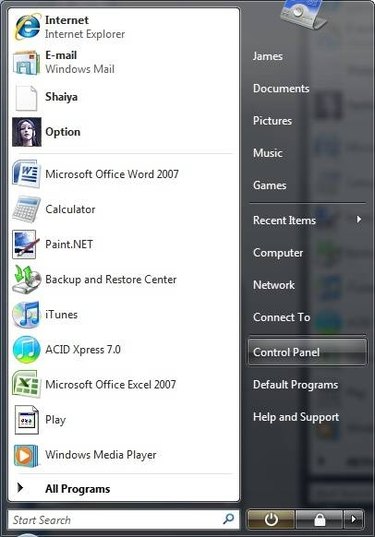
Press the "Start Menu" button and click on the "Control Panel" option. This will open a new window.
Step 3
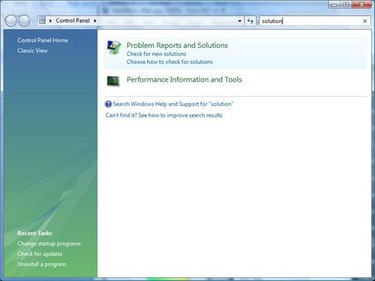
Click on the text field in the upper right-hand corner of the "Control Panel." Type "solution"--this will bring up one or more clickable options; click on the option labeled "Problem Reports and Solutions." This will open another new window.
Step 4
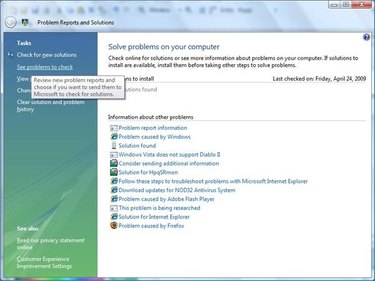
Click on "See Problems to Check," located on the upper left-hand side of the "Problem Reports and Solutions" window.
Step 5
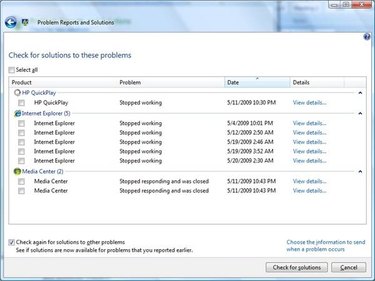
Scroll the list of recent computer problems to find problems associated with the specific application you're trying to fix. You can view more details about the recent errors for that application by clicking on "View Details." Check the boxes for any application errors that you want Windows to automatically fix. If you want to fix all recent program errors, simply click "Select All" near the top left-hand side of the screen.
Step 6
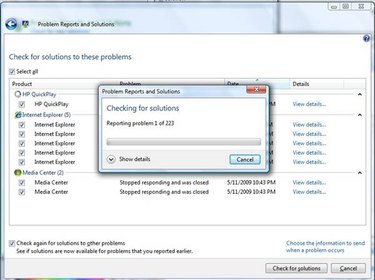
Click "Check for Solutions." Windows will initiate an automatic search for fixes to the specific application problems you have selected---you must have an active Internet connection for this search to work. Be patient while the search is conducted; depending on the number of errors Windows needs to fix, it may take several minutes to complete. Once Windows has identified solutions to your computer's specific problems, click to install the new fixes for your PC's applications.
Video of the Day