Used to treat waste before letting it process and absorb into the ground, septic tanks come in many shapes and sizes. Commonly made from concrete or plastic, a properly built septic system can last from 15 to 30 years with proper maintenance. Though the work isn't for the squeamish, building a homemade septic system can be time consuming but can save a homeowner hundreds to thousands of dollars in the process.
Video of the Day
Permits Before Digging
Before attempting to build your own septic system, check first with your local health department and county government offices to determine if a homemade septic system is acceptable in your area. If they are, take note of any requirements and purchase any permits needed before beginning work. Follow the local septic system requirements to the letter during the construction process, or you may risk having to dig up your system and build it all over again later.
Video of the Day
Early Site Planning
With these in mind, you'll next need to determine the best place to put your septic tank and drain field: most counties require soil testing to determine the percolation rate (drainage ability) of the soil as well as the property's seasonal water tables. Local county planning boards and health departments will test and approve the best site for the septic system. County health departments and planning boards will also tell you how deep the septic tank and drain field pipes should be placed. At the same time, you'll need to determine the size of septic tank and drain field that will be needed. Figure 75 gallons of septic tank space per person per day. For example, a family of five would need 75 x 5 gallons or a total septic tank size of 375 gallons. Always play it safe and figure an extra 150 gallons per day to account for visitors and miscellaneous usage. If possible, use a 1,000 gallon tank so the sludge won't have to be pumped out as often as a smaller tank would require.
Septic Tank Site Preparation
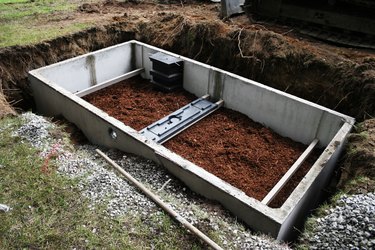
Dig the pit for the septic tank with a backhoe or shovel, or by renting or hiring a digging company. Digging by hand will take more time but will save a few hundred dollars, if this is desired. You can also save money by making the pit completely ready for the tank to be dropped in by the person delivering it. Prefab septic tanks start at $600.00 and increase in price depending on the total square feet. Connect the drain pipe going to the drain field either before or after the tank has been placed into the ground. Depending on the county's survey, and if you in an area that has poor drainage, sand may need to be brought in and placed in the hole and around the tank so that the septic tank does not become water-logged.
The drain field, where material from the tank will eventually end up, should be at least 10 feet from the residence and from any body of water, such as a pond or river. Dig the drain field trenches, which should be two sections of 50 feet or four sections of 25 feet. A total drain area of 100 feet is required for most septic systems. These trenches should be 3 to 4 feet deep and 3 feet wide. The trench should also have a very slight downward slope so that the waste can drain out of the the drain pipe. Once the trenches have been dug, fill the bottom of the trench with 1 foot of gravel or "drainrock."
Connections and Finishing Touches
With your site prepared and the septic tank placed, you may finally link the components of the septic system together. Connect the perforated drain pipe to the pipe coming out of the septic tank. Cover the perforated pipe with more gravel and a thin sheet of filter fabric to keep the dirt from filtering down to the drainpipe. Finally, cover the trench with dirt originally removed from the trench.