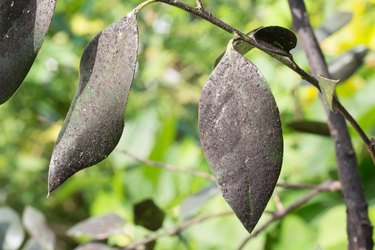
Sooty mold forms a gray or black coating on leaves, tender stems or flowers. The mold may cover an entire leaf surface or appear in spots, depending on the severity of the problem. Although sooty mold doesn't penetrate the plant tissues, it can weaken it by blocking sunlight. A severe enough sooty mold problem can cause general plant decline but rarely kills the plant. The mold grows on the sticky honeydew secreted by sap-sucking pests, such as aphids and mealybugs, so you must both eliminate the pests while treating the mold.
Take Out the Pests
Video of the Day
Step 1
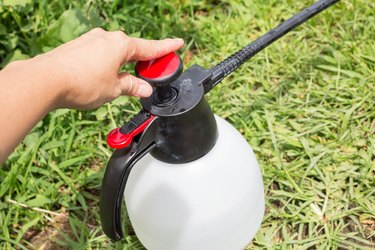
Mix 4 tablespoons of horticultural oil with 1 gallon of water in a pump sprayer. Use a neem- or paraffin-based horticultural oil to combat aphids or whiteflies, or a fish-based or standard horticultural oil for scales and mealybugs. Shake the mixture vigorously so the oil and water are mixed together.
Video of the Day
Step 2
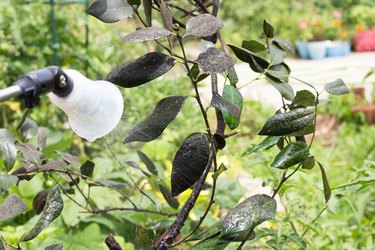
Spray the oil mixture on the affected leaf surfaces until they are drenched. Apply oil to dry plants when temperatures are below 100 degrees Fahrenheit and above freezing.
Step 3

Reapply the oil a second time five to seven days later if any pests remain on the plant and if the plant isn't suffering from any damage or stress from the first application. Light insect and sooty mold infections typically only require one application, while more severe infections may require two applications.
Manage the Mold
Step 1

Spray the plant with a forceful jet of water from a garden hose one or two days after the final oil treatment to remove as much sooty mold from the leaf surfaces as possible. Spray the plants early in the day so the water dries in the morning and afternoon sun.
Step 2
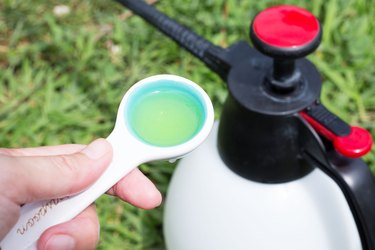
Mix 1 teaspoon of mild liquid soap or detergent with 1 gallon of water in a clean pump sprayer if some mold remains on the plant after the plain water spray. Stir the solution to combine the soap and water.
Step 3
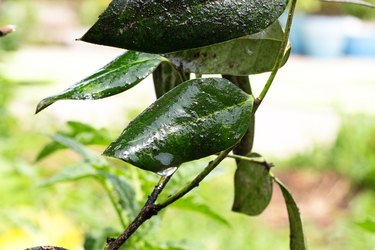
Coat the affected leaves with the soap and water spray, drenching them until the excess spray drips off the leaves. The soap helps break down and remove any remaining sooty mold residue.
Step 4
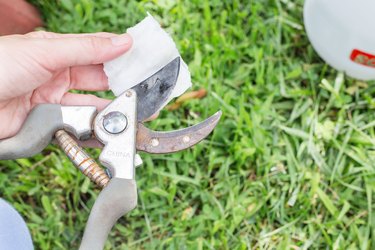
Rinse the leaves with a sharp spray of fresh water the following day to remove any soap residue and remaining sooty mold. Trim off any dead or badly mold damaged leaves that remain, wiping the shears with an alcohol-soaked rag between cuts to kill any remaining mold spores.