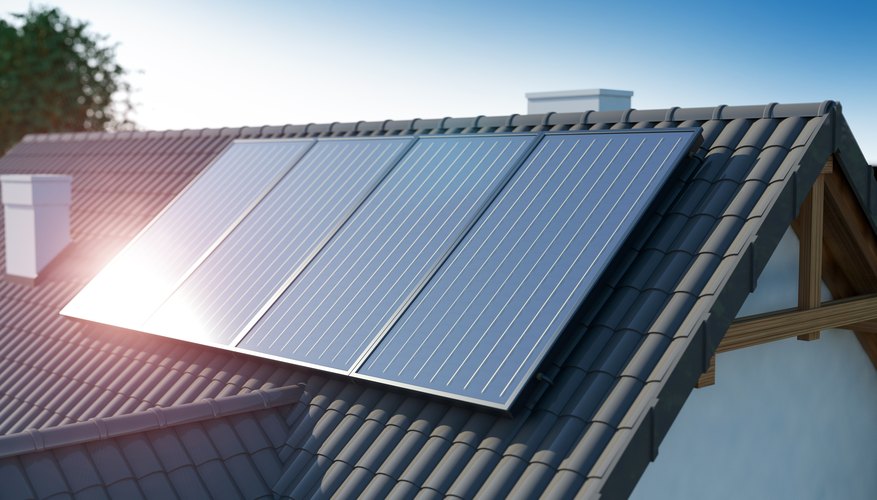



Wiring solar panels to a battery is a convenient and cost-effective way to keep your power supply fully charged. This is especially useful for outdoor equipment such as golf carts, motor boats and tractors that may not receive daily or even weekly use. The connections are easy to make. Doing the job right requires a little simple math to calculate how many solar panels are needed to charge a battery with a specific amp rating. This article explains how to get it done.
Battery-connecting cables with fusible links
Solar panels
Pliers
Wrenches
Screwdrivers
Solar panels produce maximum power output when positioned perpendicular to the sun.
Determine the amp-hour rating of the battery to be charged. A wet-cell battery loses about 1 percent of its amperage per day when not in use. This means the solar panel each day will have to supply 1 percent of the battery's total amperage to maintain full charge. For example, a solar panel must be capable of producing 0.5 amp-hours of energy per day to maintain the charge on a 50-amp battery. But solar panels are rated in watts, so some simple conversion math is needed.
Convert the solar panel rating from watts to amperage by dividing the panel's watt rating by 15. A 50-watt solar panel would have a rating of approximately 3 1/3 amps. Allowing for clouds, foul weather and obstructions during sunrise and sunset, a solar panel should deliver about four hours of average output each day. So a 50-watt panel will produce 4 x 3 1/3 amp-hours per day, or 13 1/3 amp-hours -- more than enough to keep a 50-amp rated battery on full charge.
Connect the positive wire from the solar panel to a battery cable with a fusible link between the battery and the solar panel. This will help prevent a fire or battery explosion in the event of a short in the wiring.
Connect the negative wire of the solar panel to the negative terminal of the battery.
To wire solar panels together for charging a battery, connect the panels in a parallel circuit. This allows you to use several panels of less expensive, smaller power rating together to achieve the same result as a more powerful panel.
Wire solar panels in parallel by connecting the positive wire of the first solar panel to the positive terminal of the second panel and so on.
Connect the negative wires together in the same fashion, and the wires off the last panel in the parallel circuit are connected to the battery.
Calculate total amperage of solar panels wired in parallel by adding the amp output of each panel. Panels wired in parallel maintain the same voltage through the circuit, while the amperage accumulates. For example, 10 five-amp solar panels would yield 50 amps of power at constant voltage.
Items you will need
Tips
Tips
- Solar panels produce maximum power output when positioned perpendicular to the sun.
Writer Bio
James Clark began his career in 1985. He has written about electronics, appliance repair and outdoor topics for a variety of publications and websites. He has more than four years of experience in appliance and electrical repairs. Clark holds a bachelor's degree in political science.