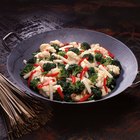
How to Use a Wok

How to Use a Wok thumbnail
Seasoned woks will start to blacken---that means they're becoming more non-stick

Woks have become a popular tool in American kitchens. Home cooks are looking for ways to cook healthier meals and experiment with more exotic recipes, and woks give them access to stir-frys and Chinese cuisine. Woks can be used for all types of cuisine, though, and are worth having around for any dish that you need to braise, steam, deep fry or stir-fry. Woks are widely available in most department and kitchen/cooking supply stores and are just as affordable as other cookware. Does this Spark an idea?

Things You'll Need

  • Oil
  • Clean, heat-resistant brush, cloth or paper towel
  • Wok spatula or wire skimmer (spider)
  • Wok brush
  • Kosher salt
Show More

Instructions

  1. Seasoning Your Wok

    • 1

      Wash a new wok with soap and water, then dry thoroughly.

    • 2

      Heat your wok over medium heat until it is very hot. When you drip some water into the wok, the water should bead up and dance across the bottom of the wok for a few seconds before completely dissipating. If it's too hot, take it off the heat, and allow it to cool slightly.

    • 3

      Coat the entire inside of the wok with oil while it is still on the heat. Pour 1 to 2 tbsp. of oil into the wok, and brush or wipe it around the entire inside of the wok. Use oil with a high smoking point, such as palm or peanut oil.

    • 4

      Allow the oil to cook to the wok's surface. Each time you do this, you will create a more stick-resistant surface.

    • 5

      Allow the wok to cool before storing.

    Cooking

    • 6

      Heat your wok over medium to medium-high heat until it is very hot, as described in Step 1 of the previous section.

    • 7

      Add cooking oil as soon as the wok is hot enough. Allow your oil to heat up for about 30 seconds. If you are deep-frying, pour in 2 to 3 inches or more of oil and allow its temperature to rise to 350 to 375 degrees F.

    • 8

      Cook your ingredients in the hot oil. Cook any meat ingredients first because they will take longer to cook than your vegetables, which should still be crisp when they're finished. If you are stir-frying a large portion, cook the ingredients in batches. Stir the ingredients so they cook evenly, then move them to a serving dish. If you're deep-frying, use your wire skimmer, also known as a spider, to flip your ingredients over in the hot oil and to remove the completely cooked food from the oil.

    • 9
      Cover and place your bamboo steamer over simmering water in your wok to steam food

      Steam your ingredients by placing them in your bamboo steamer and placing the cover on the steamer. Put enough water into the wok to come within 1 inch of the steamer's bottom food level. Bring the water to a simmer, and place your bamboo steamer directly into the wok. Remove the steamer from the wok as soon as your food is cooked.

    Cleaning

    • 10

      Allow your wok to cool and wipe out any leftover crumbs with a clean cloth or paper towel. Safely discard of any oil you may have used for deep frying. Never use soap on your wok because soap will destroy the wok's seasoning, and it will no longer be non-stick.

    • 11

      Rinse your wok under hot water and wipe it out with a non-abrasive sponge.

    • 12

      Use a brush with sturdy bristles if you have difficulty removing food from the wok. You can buy special wok brushes for this task. If the brush still doesn't work or you do not have one, pour some salt, preferably kosher salt, into the wok, and rub it into the stuck-on food with a paper towel or cloth until the food is scrubbed off. Then, rinse the wok under hot water and wipe it dry with a cloth.

    • 13

      Dry your wok completely before storing, especially if it is not rust-resistant. You can dry it on the stove over medium heat, then let it cool completely before putting it away.

Tips & Warnings

  • If you accidentally wash your wok with soap, season it again before using. If your wok rusts, scrub the rust away with iron wool, wash the wok thoroughly with soap and hot water and season the wok again.

  • Your entire wok will get very hot over the stove. That's a good sign, but because woks can be heavy and awkward, be especially careful when handling them.

Related Searches:
  • Photo Credit Julie Elefante, stock.xchng

Comments

You May Also Like

  • How to Use a Wok on an Electric Stove

    If you have an electric stove, you might think that you cannot use a round bottomed wok on top of the flat...

  • How to Use a Wok for Fried Rice

    Fried rice is an important part of cuisines from Japan, China and Thailand. Because it can be added to just about any...

  • How to Use an Electric Wok

    The electric wok is a kitchen appliance that is easily overlooked in many homes, but once used you will wonder how you...

  • How to Use a Faberware Electric Wok

    With its wide sloping sides, the Faberware Electric Wok provides chefs with a large cooking area. You can use your wok to...

  • Why Were Woks Invented?

    Woks are a relatively recent invention in Asian cooking. The first metal woks appeared in China between 700 and 1,000 years ago....

  • How to Use a Wok Ring

    Many novice cooks are flummoxed when they purchase a new wok and find that it includes a ring inside the box. This...

  • How to Use a Tanning Bed for the First Time

    Tanning in a bed and tanning in natural sunlight are two totally different experiences. Tanning beds emit far greater concentrations of UVA...

  • How to Cook in a Wok

    Do you love going to your favorite Chinese restaurant and watching the chef cook in a wok? The meals go together so...

  • How to Use a Grill Wok

    Cooking with a grill wok is the traditional Asian method of preparing thin cuts of meat and sliced vegetables quickly in a...

  • How to Work Safely With Electricity

    Working with electricity in your home can be tricky at best. Remember to unplug appliances and trip circuit breakers to outlets and...

  • How to Use a Cast Iron Wok

    Like a cast iron skillet, a well-seasoned cast iron wok is an essential in the kitchen for stir fried meals. Cast iron...

  • How to Use a Bamboo Steamer With a Wok

    Using a bamboo steamer is a great way to cook vegetables, meat and rice without adding too much fat to the meal....

  • How to Use Proper Telephone Etiquette at Work

    There is an art to using proper telephone etiquette and a must if you work in today's business world. The steps below,...

  • How to Use a Bamboo Wok Stacked Steamer

    A bamboo steamer can be purchased at many department stores and gourmet cooking stores. It has many uses, including cooking several different...

  • How to Clean a Wok

    Comments. You May Also Like. How to Clean a Stainless Steel Wok. Stainless steel woks are suitable for high-heat cooking because of...

  • How to Season a Wok

    Seasoning a carbon-steel wok, like seasoning a cast-iron skillet, seals the cooking surface and prevents rust. A well-seasoned wok doesn't need a...

  • Wok Cooking Tips

    Wok Cooking Tips. The Asian stir fry offers a quick and healthy way to cook fresh vegetables and meats. A wok--the large,...

  • How to Use a Grill Pan

    For hundreds of thousands of people who love to grill, but live in either an apartment, or a residence with no access...

  • How to Use Knives in Leather Working

    Before beginning any leather working project, you should understand how to use knives in leather working. Learn how to perfect your leather...

  • How to Use a Shaving Brush

    Many men are discovering the benefits of using an old-fashioned shaving brush to improve the quality of their morning shave. A high-quality...

Related Ads

Know Your Knives: Josh Ozersky’s Comprehensive Guide

I have a lot of knives. You probably do too. I really don’t know what to do with them all. There’s a Chinese cleaver, aï؟½

Featured