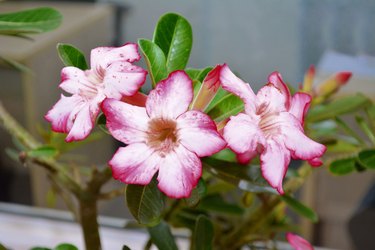
A desert rose (Adenium obesum, USDA zones 11-12) isn't your typical succulent, nor does it grow on a thorny rose bush, and proper desert rose plant care reflects the unique nature of the plant. While many plants in the succulent family mainly feature spiky green leaves, the desert rose overflows with bright pink or white single, double or triple trumpet-shaped flowers under proper growing conditions. Thick, exposed roots give the plant a distinct look. It's a relatively low-maintenance plant that doesn't need much water, but it does need plenty of sunlight to thrive. Treat your desert rose well, and it will treat you with beautiful summer blooms.
Desert Rose Planting Location
Video of the Day
Desert rose plant care starts with the right location. The desert rose works well indoors or outdoors, either in a pot or planted directly into the ground in zones 11 and 12. Potted desert roses can go outdoors during the warm months and indoors for the winter. If you pot the plant, use a rich potting mix. Outdoor soil should drain well to keep the succulent from getting too much water.
Video of the Day
Because the desert rose loves the heat, put it in a warm, sunny spot if you grow it indoors. Keep it away from air conditioner vents or drafty windows and doors. Outdoors, the plant can be a perennial in warmer Southern areas. The plant can't survive frost. In cooler Northern climates, the desert rose is an annual or houseplant only.
Desert Rose Sunlight Requirements
Your desert rose needs a bright home to grow well. If you keep the plant in a shady area, it likely won't flower. To keep the flowers growing all summer, it needs at least six hours of light each day. If you grow it indoors, place the desert rose near a window that gets plenty of sunlight.
Desert Rose Watering Needs
A regular watering routine helps your succulent adjust and know what to expect. A desert rose can survive on very little water, but you may notice it drops leaves if it doesn't get enough. Overwatering can cause root rot or disease. Let the soil dry before you water the plant again. When you irrigate an outdoor plant, saturate the soil. For a houseplant, don't let water sit in the saucer.
How often you water your desert rose depends on the growing conditions and time of year. Increasing water during the summer growing season gives the outdoor plant the moisture it needs. Warmer temperatures and lots of sunlight mean the succulent needs more water.
During the winter when the plant is inactive, overwatering is particularly dangerous as the plant is more susceptible to root rot. It's better to let it get a little too dry than overwater, as the plant stores fluid in its stem/trunk. If your plant is outdoors, it's best not to water it during the winter months. Letting it rest for the winter causes the plant to go dormant. It loses its leaves and flowers during this time, but it will come back to life in spring when you start watering it again.
Desert Rose Fertilizer Recommendations
Feed your desert rose during the growing season to encourage the flowers to flourish. A balanced fertilizer designed for flowering plants works best. Look for a fertilizer with a slightly higher phosphorus number, which is the middle number, such as 10-20-10.
Dilute the fertilizer so it's only half the strength recommended on the package. Monthly applications from spring to fall should be enough. If you overfertilize, high fertilizer salt levels in the soil can hurt the plant. You might notice brown edges on the leaves if this happens.
Signs of a Problem
Your desert rose gives you clues if it's not getting the care it needs. A common sign of a problem is yellowing or loss of leaves. What does it mean? You may be underwatering or overwatering. Too much shade can also cause the leaves to yellow or fall off. Even stress from being transplanted or moved can cause leaf issues.
Spider mites are the main pest concern for the desert rose. The mites love the dry conditions that make the succulent grow well. You can see the spider mites on the plant. Aphids and mealybugs can also be an issue. Check the plant regularly to find the pests early. An easy way to get rid of the mites is to spritz the undersides of the foliage daily, being careful to not saturate the soil.
Desert Rose Toxicity Considerations
Desert rose is not an edible plant. All parts of the plant are toxic. It's considered poisonous to both animals and humans, so put your plant in a safe spot if you have kids or pets. In animals, signs of ingestion may include vomiting, diarrhea, lack of appetite and irregular heartbeat. Animals can die from the toxicity of the plant. If you notice any signs or think your pet ate the plant, head to the vet.
Humans may react differently to the plant. Some people have strong reactions while others might have mild symptoms. Possible signs of poisoning from the desert rose include heart arrhythmia and nausea. Call poison control or head to urgent care if you suspect your child ingested the plant.