It's important for dogs to build muscle mass to keep their body healthy and strong. You can help your dog to build muscle by feeding him any high-protein dog food recommended by your veterinarian and by potentially using a dog muscle builder supplement.
Why dogs need strong muscles
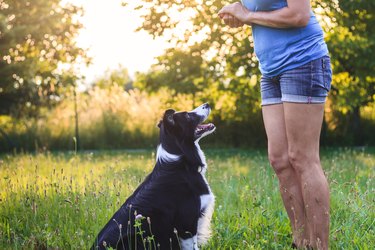
Some pet owners might wonder why building muscle in their dog should be a priority. Your dog's musculoskeletal system — which includes the bones, cartilage, muscles, ligaments, joints, tendons, and other connective tissue — supports her body. This system allows your dog to move and protects her vital organs.
Video of the Day
Video of the Day
The more muscle mass your dog has, the stronger the musculoskeletal system will be. As a result, your dog will be healthier. Her tendons and joints will be better protected, lowering the chance of injury. Building muscle is also a way to combat canine obesity, which can lead to health problems like cancer, osteoarthritis, heart disease, and more.
The importance of high-quality food
Feeding your dog high-quality food is an important way to promote his health. A quality dog food with good ingredients keeps your dog as healthy as possible. Your dog's diet should include protein, natural meats, and healthy ingredients.
Stay away from foods that are corn-based or made from "mystery" meats. They probably won't have much nutritional value to help your dog build that lean muscle you want to see.
Protein for dogs to build muscle
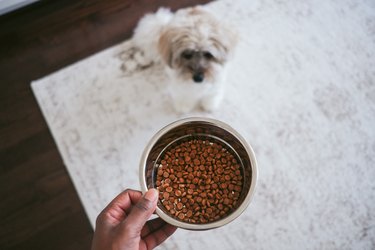
There are plenty of high-protein dog foods on the market that are full of quality meats and will help your dog build muscle. Talk to your veterinarian about the best choice for your pet. Some dog owners also choose to prepare a raw diet for their dog under the counsel of a veterinarian.
If you have a senior dog or a dog who has lost muscle mass, look for the best dog food for muscle atrophy. Signs of muscle atrophy include weight loss and weakness. The best dog food for muscle atrophy will be something that's high in protein but easy to digest, along with a good balance of carbs and fats.
If you have a puppy, purchase a high-protein puppy food to help your puppy grow up healthy and strong. Your veterinarian can advise you on the best choice.
Dog muscle builder supplement
Your vet can also help you figure out whether your dog needs a dog muscle builder supplement. In most cases, dogs can gain muscle mass through diet changes alone with no need for extra supplementation. Sometimes, however, a dog who has health conditions may benefit from a supplement.
Dog muscle builder supplements come in the form of either powder or tablets. They help build muscle mass, improve stamina and strength, increase energy, and help your dog recover quicker from any injuries that might occur.
Exercises that build muscle in dogs
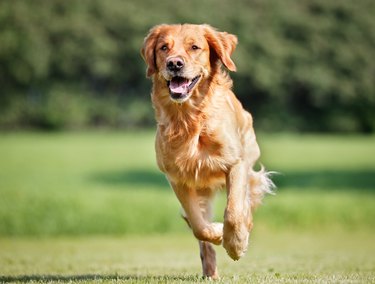
Diet isn't the only important component to build muscle in dogs. You'll want to encourage your dog to be physically active too. Try teaching your dog exercises, such as "puppy push-ups," where you have the dog move from a seated position to a down position and back to seated.
You can also build strength by using a wobble board, where your dog has to balance on an unsteady surface. Simple games like tug of war or sprinting will build muscle as well.
- Merck Manual Veterinary Manual: Introduction to Bone, Joint, and Muscle Disorders of Dogs
- VCA Hospitals: Obesity in Dogs
- Pet Care RX: 6 Tips for Building Lean Muscle in Bigger Dogs
- VCA Hospitals: Muscular Dystrophy
- Top Dog Tips: Muscle Builder for Dogs: What It Is and How to Use It
- American Kennel Club: Easy Exercises for Canine Conditioning