eHow launches Android app: Get the best of eHow on the go.

How To

How to Grow Semidwarf Peach Trees

Contributor
By Jennifer Reniker
eHow Contributing Writer
(0 Ratings)

Homegrown peaches are juicier and better tasting than peaches purchased in stores. While a regular peach tree is too big for most gardens, and a dwarf tree might be too small to produce enough peaches for a family, semidwarf peach trees are just the right size. Semidwarf trees are regular peach trees grafted onto a root stock that limits the size of the tree. The mature height of your semidwarf tree will be 15 to 20 feet, and it will produce between 3 to 5 bushels of peaches a year. With proper care, semidwarf peach trees can live for 20 years.

Difficulty: Easy
Instructions

Things You'll Need:

  • Plastic tree protector
  • 2 by 4 stakes
  • Soft tree ties
  • Sturdy wire or rope
  • Fertilizer
  • Mulch
  • Water
  • Pruning shears
  1. Step 1

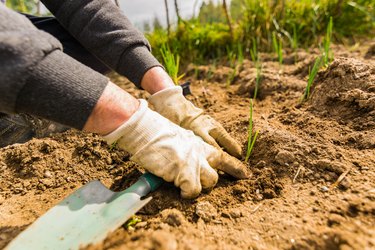
    Plant semidwarf peach trees in early spring after all danger of frost has passed. Use dormant, bare-root trees. Choose a well-drained spot in full sun with a soil pH of 6.0 to 6.5. Dig a hole 1 foot wider than the root ball and deep enough so the graft will be 2 to 3 inches above the soil. Prune broken roots before planting. Tamp soil firmly around roots. Space your trees 12 to 15 feet apart.

  2. Step 2

    Wrap the trunk of your peach tree with a tree protector. Tree protectors prevent damage to the trunk from animals, wayward lawnmowers and weed eaters and sun scald. Take the tree protector off for part of the growing season to allow trunk expansion as the tree grows. Once the tree reaches its mature height, the tree protector can stay on year round. The lower 1/4 to 1/3 of the tree should be wrapped.

  3. Step 3

    Stake your young trees so they will develop strong, straight trunks. Drive two 2-by-4 wooden stakes on opposite sides of your tree. The stakes should be driven at least 2 feet into the ground and just outside the root ball. The driven stakes should be 1/2 to 1/3 as tall as your young tree. Loop tree ties to the tree to protect the bark, run heavy wire through the loops and attach loosely to the stakes. The tree should be able to sway gently in the wind. Stakes can be removed when the tree is 3 to 4 years old or has reached half its mature height. Readjust the ties as the tree grows.

  4. Step 4

    Fertilize your peach tree with a 10-10-10 fertilizer or a fertilizer formulated for stone-fruit trees. Fertilize young trees 6 weeks after planting. Fertilize yearly in spring before your tree blossoms and, again, in early summer after fruit begins to swell. Sprinkle the fertilizer at the drip line of your tree rather than at the roots.

  5. Step 5

    Mulch your tree to retain moisture and to inhibit weeds. Use the doughnut method to place the mulch. Pile mulch to a height of 3 inches around your tree spreading it to cover a 2- to 3-foot area. Pull the mulch away from the trunk leaving a space of 1 to 2 inches between the trunk and the mulch.

  6. Step 6

    Prune your peach tree yearly. Peaches grow best with an open center. Select three lateral branches to form the crown. Prune back all other branches, including the central leader. As the tree grows, remove downward growing branches, branches that cross over other branches and branches that grow into the center of the tree. Prune in early spring before the buds break, but late enough that you will be able to prune any winter-killed branches.

  7. Step 7

    Thin the fruit when they reach thumbnail size to produce the best peaches. Leave 5 to 6 inches between each peach.

  8. Step 8

    Provide the peach trees about 5 gallons of water a week during the summer.

  9. Step 9

    Watch for leaves curling or yellowing, immature fruit dropping from the tree, insect damage on peaches and leaves, holes bored in bark and caterpillars and trees not blooming or setting fruit. Peach trees suffer from a host of diseases and pests. Contact your local extension office for advice in handling insects and disease.

Tips & Warnings
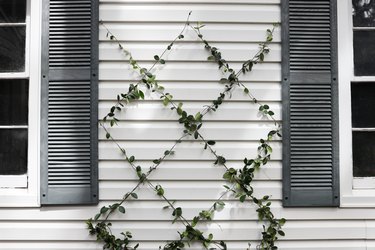
  • In small gardens, peach trees can be trained against a south-facing wall or pruned into a step-over hedge. Peaches taste best if allowed to ripen on the tree. Pick when they develop a blush. Allowing room for the staked peach tree trunk to sway will help the tree develop a strong trunk that will better withstand storm damage.
  • Do not fertilize your peach tree after July, as this might cause growth that will not survive the winter. Do not prune late in the year, as you will encourage growth that might not survive the winter. Overwatering can lead to crown rot.

Post a Comment

Post a Comment
  • Have you done this? Click here to let us know.
I Did This

Related Ads

Home & Garden
Ruby Bayan,

Meet Ruby Bayan eHow's Home & Garden Expert.
Get Free Home & Garden Newsletters

Copyright © 1999-2009 eHow, Inc. Use of this web site constitutes acceptance of the eHow Terms of Use and Privacy Policy.   en-US Portions of this page are modifications based on work created and shared by Google and used according to terms described in the Creative Commons 3.0 Attribution License.

eHow Home and Garden
eHow_eHow Home and Garden