

Grounded Vs. Ungrounded Thermocouple

Table of Contents
Temperature sensors are important components for our daily home life as well as for process control in modern industry. There are four basic types of temperature sensors: the resistance temperature detector (RTD), thermistor, infrared and the thermocouple.
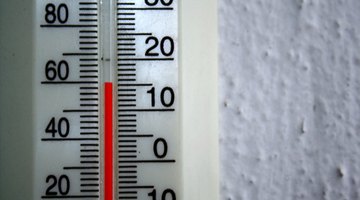
RTDs are effective but expensive; infrared is useful when the target should not be touched; and thermistors are useful for small temperature range applications such as a home thermostat. Thermocouples are relatively low-cost sensors that accurately measure a wide range of temperatures.
Thermocouple Theory
In 1821, T.J. Seebeck discovered the thermoelectric effect (also called the Seebeck effect): When a circuit made up of two dissimilar metals is heated at one end, an electric current flows through the circuit. The magnitude and direction of the current is determined by the temperature difference in the two ends and the thermal properties of the metals used. The thermocouples used today are based on the Seebeck effect.
Grounded Thermocouples

The junction of the two dissimilar metals that interfaces with the target medium, the sensing junction, is enclosed in a sheath called a probe. A grounded thermocouple is one where the sensing junction is wired directly to the probe wall. The result is very good heat transfer from the target and a quick response time.
Ungrounded Thermocouples
The sensing junction of an ungrounded thermocouple is electrically isolated from the probe wall. This results in a slower response time, but the electrical isolation of ungrounded thermocouples gives them some important advantages over grounded versions: They last longer, they interface more easily with instrumentation and they eliminate ground loop problems. (Ground loop problems stem from the unintended connection of a circuit to ground.)
Exposed Thermocouples
An exposed thermocouple is one where the junction is outside the probe wall and exposed to the target medium. They have the best heat transfer and quickest response time but are limited by the kinds of target media where they can be used. They would not be suitable for caustic or corrosive target media, for instance. In cases where quick response time is essential, the exposed thermocouple might well be the best choice.
Choosing the Right Thermocouple
Once you have decided that the thermocouple is the right temperature sensor for your application, not only will you have to choose a junction type but also a calibration type. There are four common types (J, K, T and E), and each is intended for different temperature ranges and environments. Next you will have to choose grounded, ungrounded or exposed sensing junctions. Your decision on which of these three is best will be based on such things as environment, response-time requirements, electrical interference and instrumentation requirements.
References
Resources
Writer Bio
Wayne Shirey is a senior control engineer with Southern Synergy who began writing nonfiction in 2007. His articles have appeared in several reference works, including "Great Events from History" and "The Encyclopedia of American Immigration." He holds a Bachelor of Science in engineering from the University of Alabama in Huntsville.
Photo Credits
- grades image by Imagenatural from Fotolia.com
- grades image by Imagenatural from Fotolia.com
- industry image by dinostock from Fotolia.com
More Articles

