How to Catch Stone Crabs

How to Catch Stone Crabs thumbnail
Catch Stone Crabs

Stone crabs have a remarkable trait in that they are able to regenerate lost limbs. Current fishing laws take advantage of this by allowing recreational crabbers to remove the largest claw from a stone crab and return the animal to the sea. The same limb can be grown back multiple times. However, because of this, it is illegal to keep the whole crab. The regulations protect populations of stone crabs while allowing the public to dine on the tasty morsels. The delicate tidbits are in high demand and regularly fetch premium prices, causing a crab craving to take a real bite from the family budget. Luckily, stone crabs are easy to catch. Follow the steps in the guide below and, for less than the cost of one order of crab claws from the local seafood shack, you can be pulling in a pile of claws of your own.

Things You'll Need

  • Crab traps
  • Crab bait
  • Empty bucket
Show More

Instructions

    • 1

      Select your traps. There are two kinds of traps commonly used for catching the stone crab. The most common one is rectangular model made of wire or plastic. The basic box is attached to a float with a rope. It has a trap door which allows the crab to come in to eat the bait, but won't let it back out. This type of trap can be left out floating in the water overnight, which is when stone crabs commonly feed.

    • 2

      Compare the rectangular wire trap with its smaller triangular rival. The triangle trap is favored by those without boats who still hope to catch stone crabs by setting traps out early in the morning. These traps work better in shallow waters than the rectangle variety and can be easily used from docks and bridges. However, they lack the one-way door. Instead they require frequent inspection by the crabber. By quickly pulling the trap from the water, the movement of the water forces the doors closed, locking the crab inside.

    • 3

      Choose your bait. Popular choices for stone crabs are fish heads or chicken necks.

    • 4

      Locate a likely stone crab population. Stone crabs can be found in beds of sea grass, near oyster reefs, boat landings, tidal creeks and mudflats.

    • 5

      Place the bait inside your trap and toss it into the water. If you're using the triangular traps, check on them every 15 to 20 minutes to make sure the bait is still there. The larger, rectangular traps can be left in the water for up to three days.

    • 6

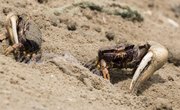
      Remove your trap and inspect your catch. If you've managed to catch a rusty brown crab with one gigantic black-tipped claw, you've caught yourself a stone crab.

    • 7

      Measure the big claw. If the length of the claw is at least 2¾ inches, you can keep it. You cannot keep the whole crab, just the one big claw. To remove the claw, pin the crab under your foot, applying just enough pressure to hold it down. Grab the claw firmly, placing your hands as close to the body as possible, and twist the claw counterclockwise and give a sharp tug to pull it off at the base. Don't worry. The crab will grow another one.

    • 8

      Return the crab to the water and place the claw in a bucket with clean, cold water to keep it chilled.You can collect up to a gallon of crab claws per person or two gallons per boat on any given day between Oct. 15 and May 15.

Tips & Warnings

  • As an economical alternative, you can go crabbing with nothing more than a piece of strong nylon rope, a fishing net, a weight and a chicken neck. Simply tie the weight and then the bait to the rope and toss it into the water. When you feel a tug on the string, begin pulling the string in. When the crab is in sight, slip the net behind it and scoop it up. Sometimes you can get fish heads from a local seafood restaurant or fish market free.

  • You cannot have more than five traps out at any time without a commercial license. You cannot keep the stone crab's claw if it only has one. You cannot remove the claw from an egg-bearing female. To determine the gender, flip the crab over and inspect the abdomen. The differences between the two are fairly obvious -- see the link to the Stone Crab Photo Gallery for an example. Floats of recreational traps must be clearly marked with the letter "R" and must be permanently marked with the crabber's name and address.

Related Searches:

Resources

  • Photo Credit wikimedia commons

Comments

You May Also Like

  • Facts About Stone Crabs

    Stone crabs are a large type of crab living along the Gulf of Mexico and in Florida waters. They are a popular...

  • How to Catch a Crab

    Crabbing's a fun and easy way to spend a few hours at the beach. Although patience is usually the best strategy, especially...

  • How to Bait a Crab or Lobster Trap

    A great way to cut the costs of seafood and get outdoors for some exercise is to trap your own crabs or...

  • Fishing Regulations for Florida Stone Crab

    Fishing Regulations for Florida Stone Crab. The sweet white meat of Florida stone crab claws has Floridians salivating by the time the...

  • How to Make a Stone Crab Trap

    Whether they're eaten as crab cakes, in gumbo, or picked apart with mallets, crabs are a nutritious and enjoyable meal. Many people...

  • Stone Crab Laws

    Crab meat is a low-fat, high protein, nutritious food that many people enjoy, and getting your own crab makes it that much...

  • How to catch blue crabs in Florida

    I'm guessing you are dying to know how to catch Blue crabs in Florida, right? If that's why you're here, you've come...

  • How to Harvest Stone Crabs

    Stone crabs are sweet, delicate, highly sought-after crabs harvested primarily for their large claws. Stone crabs are found and harvested along the...

  • How to Find a Stone Crab

    Stone crabs can be found off of the coasts of Florida, Texas, down through Central America, Cuba and the Bahamas as well...

  • Stone Crab Regulations

    Stone Crab Regulations. When attempting to catch stone crabs, crabbers are searching for large claws that are of the legal size. To...

  • How to De-Claw a Florida Stone Crab

    The Florida stone crab is found in the western North Atlantic Ocean, from Connecticut to Texas and down into the Caribbean. The...

  • How to Catch Tanner Crabs

    Tanner crabs live in the cold waters of the northern Pacific and Atlantic Oceans. They are known by many names, including "snow...

  • How to Use Mole Crabs As Bait

    The mole crab, more commonly known as the sand flea, is a type of burrowing crustacean found in both the Pacific and...

  • How to Catch A Sand Crab

    Are you looking for a fun new activity to teach your children this summer? If you're not a regular beachcomber, you may...

  • How to Catch Crabs for Dinner

    Catch crabs for a fun and money saving way to enjoy fresh seafood!

  • How to Make a Crab Trap

    Crab traps are used to catch crabs in the sea. A baited trap is placed on the sea floor, and crabs caught...

  • How to Cook Stone Crab

    eHow Food, Rachael Ray and her Buddies want to show you how to get more out of every day, every meal and...

  • Florida Blue Crab Laws

    Florida Blue Crab Laws. One of the most popular types of seafood found within the bounty of Florida's oceans is the blue...

  • How Long to Boil Stone Crab Claws

    If you're lucky enough to be able to get your hands on some succulent stone crab claws, then you're in for a...

  • How to Clean & Prepare Florida Blue Crabs

    Few foods top the sweet, succulent flavor of blue crabs, a species abundant in Florida. Whether you catch your own or pick...

Related Ads

Featured