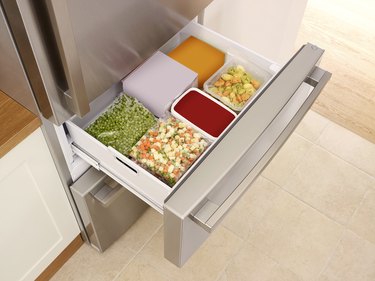
If you have a chest freezer, chances are you want easy access to your frozen foods. However, in certain situations, you might feel better if you were able to lock your chest freezer. For instance, if you keep your freezer at a camp, in a garage or in a shed where it might not be as secure, locking it could prevent unwanted theft or even animals from getting into your food. Additionally, having a lock on the freezer can help prevent children from playing in the appliance, which can be extremely dangerous.
Chest Freezers With a Lockable Lid
Video of the Day
Some chest freezers come with a lockable lid. Many major manufacturers, including GE, sell such freezers through retailers like big box stores and home improvement chains. These units are great because the lock comes preinstalled and you can simply set it and rest easy that your food is safe (and your children aren't in danger).
Video of the Day
To lock a chest freezer that comes with a lockable lid, refer to the manufacturer's instructions first. In most cases, you should be able to insert the key that's provided into the lock and turn it to the right as you would with most locks.
Before you do this, be sure that the freezer is set to the desired temperature. This is usually adjusted within the chest freezer by way of a dial or button.
Adding a Freezer Lock
If your chest freezer doesn't have a preinstalled lock, it may be possible to add one yourself. However, before you do so, be sure that you're comfortable with the tools required (and that you have access to those tools). If you're at all uncertain or uncomfortable, it's best to purchase a chest freezer with a built-in lock or consult a professional or friend who knows how to complete the process.
Begin by cleaning the exterior of the freezer. Then, locate the center of the freezer door by using a measuring tape or ruler. Mark it with a pen or marker.
You'll need a single-hinge hasp lock, which usually has a loop that protrudes (called a hasp) and hooks over a metal piece called a staple. According to Freezer Appliances, it's also possible to purchase locks designed specifically for chest freezers, which may be preferable depending on the specifications of the appliance you have.
Installing a Chest Freezer Padlock
Next, position the lock for the freezer right in the middle of the appliance where you had previously marked. The round hasp end where the loop protrudes should hang over the edge of the freezer. Place the other part of the lock (the staple) on the side of the freezer so it connects correctly with the hasp when closed.
Use a heavy-duty metal epoxy to glue the two lock pieces to their respective parts of the freezer door. Be sure that you don't move the lock pieces during the adhesive process. It may help to outline the lock parts in the location you'd like them to ultimately be in case you jostle them.
Once the epoxy has dried (refer to the package instructions for details), close the hasp over the staple. Attach them with a padlock to lock the chest freezer. Be sure to store the key in a safe place.