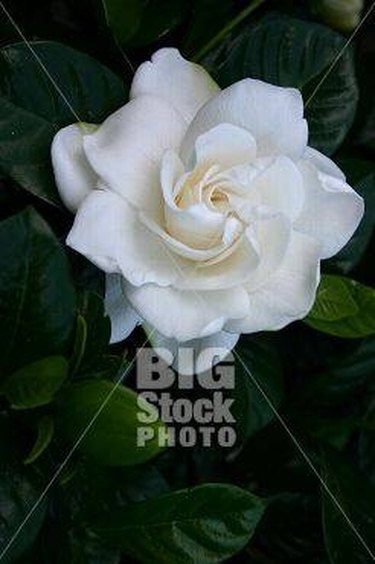
Growing Gardenias in Arizona doesn't always meet with success, but it is possible. If you are growing gardenias in the heat of Arizona, watch them carefully, especially when it is hot and dry. Most success is found growing gardenias in containers and placing them in shade. When the temperatures reach 115, flood the gardenia plants well. Use bark chip mulch, fish emulsion fertilizer and coffee grounds for best results.
Step 1
Choose a gardenia variety that grows best in the Arizona desert. Gardenia jasminoides is a recommended choice.
Video of the Day
Step 2
Grow the gardenia plant in soil that is acidic, highly organic and well draining. If you do not have this type of soil in your Arizona town, plant the gardenia in a container filled with a high-quality, organic potting soil. You can purchase it at any home and garden center.
Step 3
Place your potted gardenia in a large hole dug in the ground. If you want your gardenia to grow outside, this is the best way. Dig the hole large enough to hold the pot with an additional 12 inches underneath. Place the gravel at the bottom of the hole. This will improve drainage at the roots.
Step 4
Plant the gardenia so the top of the root ball lies flush with the top of the potting soil. Encourage the roots to grow out into the soil by roughing up the root ball a little. Cover the soil with a layer of ground mulch or fine bark chips, to improve water retention.
Step 5
Shelter the gardenia from hot afternoon sun. Keep the soil consistently moist, especially in the summer. Water the plant twice a day to prevent it from drying out. Add a slow-release fertilizer in March and again every 3 months.
Video of the Day