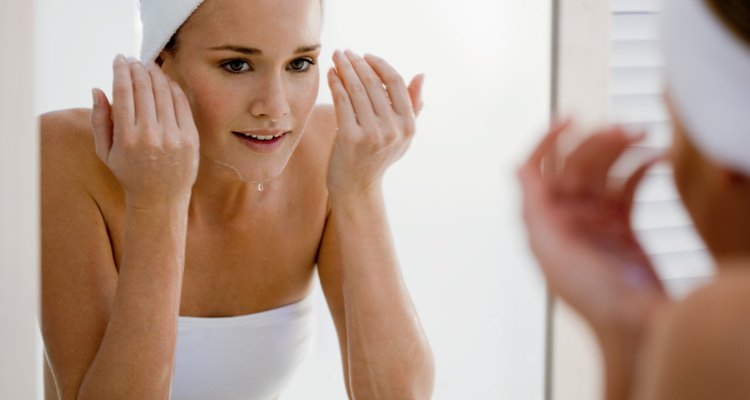
Jupiterimages/Pixland/Getty Images
Battling acne can be a frustrating and painful experience. Many of the treatment products from the drugstore or makeup counter contain harsh ingredients like benzoyl peroxide that dry out the skin and make managing acne even more difficult. Natural remedies are often an ideal alternative because they are gentler and don't contain artificial colors or fragrances to irritate the skin. A yogurt mask may help calm current acne and prevent future breakouts, while reducing the appearance of acne scars and redness. Once you know how to whip one up, you may ditch your store-bought acne treatments for good.
Benefits
There are several properties that make a yogurt mask an effective acne treatment. Yogurt contains healthy bacterial cultures that usually belong to the lactobacillus species and can aid in digestion and nutrient absorption while fighting infection and fortifying the immune system when ingested. Applied topically, the same cultures can kill acne-causing bacteria to promote clearer skin, according to the "Encyclopedia of Family Health." In addition, yogurt contains lactic acid, an alpha hydroxy acid that helps dissolve dead skin cells that can clog pores and trap bacteria that might cause breakouts. Lactic acid's exfoliating properties can also help brighten skin and diminish hyper-pigmentation, so it can help fade redness and scars from acne too. Yogurt also works as a natural moisturizer, so the mask won't dry out your skin like benzoyl peroxide and other traditional acne treatment ingredients.
Pairings
While you can apply plain yogurt with active cultures alone as a mask for acne-prone skin, you may get more effective results if you combine it with other natural ingredients. According to Janice Cox, author of "Natural Beauty at Home," fresh strawberries contain salicylic acid, which helps dissolve the keratin that holds dead cells on the skin, where it can cause clogs that lead to acne. Mash up to a ¼ cup of strawberries with an equal portion of yogurt for a natural acne-fighting mask. Fresh carrots can also help fight acne because they're a natural antiseptic. You must steam the carrots before adding them to the mask, though, so they're soft enough to combine with the yogurt. If you have extremely oily skin, adding a few tablespoons of clay powder to your yogurt mask can help absorb excess oil so it won't clog your pores and cause acne.
Use
Once you've mixed up your yogurt mask, use clean fingers to apply it to your face. The mask works as an all-over treatment, but you can also apply it in specific areas if your acne is concentrated in one or two spots. Let the mask dry for approximately 15 minutes before using warm water and a washcloth to gently remove it. Depending on how severe your acne is, you may use the mask up to three times a week.
Warnings
While yogurt is a natural product, it may still irritate skin. To make sure that you aren't allergic or sensitive to the mask, apply a test patch on the inside of your wrist the day before you plan to use it and see if you have a reaction. Since yogurt contains lactic acid that exfoliates skin, using the mask can also make your face more sensitive to sun. Use sunscreen after you use the mask to prevent sun damage.
Related Articles
How to Make a Banana, Honey & Yogurt ...
How to Use Kelp on Your Face to Tighten ...
Avocado Masks for All Skin Types

Homemade Papaya Face Masks

How to Exfoliate the Face With Honey
How to Make a Cinnamon Milk Face Mask
Yogurt, Oatmeal, Honey & Lemon Face Mask
Homemade Face Masks for Glowing Skin

How to Sweeten Plain Yogurt
How to Freeze Greek Yogurt
Home Remedies to Cure Foot Fungus
How to Make a Thermoherb Mask at Home
Can You Reduce Age Spots With Yogurt?
Turmeric, Lemon & Honey

How to Apply Dr. Palmer's Fade Cream
What Makeup Should I Wear With a Ruddy ...
How to Cook Agar-Agar Jam
How to Make Creme With Alpha Hydroxy ...

Can Any Home Remedies Get Rid of Acne ...
How to Make Body Scrub With Olive Oil & ...
References
- Encyclopedia of Family Health Volume 1; Martha Craft-Rosenberg and Shelley-Rae Pehler
- Natural Beauty at Home, Revised Edition; Janice Cox
- Herbal Body Book: The Herbal Way to Natural Beauty and Health for Men and Women; Jeanne Rose
- Beauty: The New Basics; Rona Berg and Anja Kroenke
- Natural Home Made Skin Care Recipes; Mia Gordon
- EcoBeauty: Scrubs, Rubs, Masks, Rinses, and Bath Bombs for You and Your Friends; Lauren and Janice Cox
Writer Bio
Based in New York City, Jennifer Blair has been covering all things home and garden since 2001. Her writing has appeared on BobVila.com, World Lifestyle, and House Logic. Blair holds a Bachelor of Arts in Writing Seminars from the Johns Hopkins University in Baltimore, Maryland.
Photo Credits
Jupiterimages/Pixland/Getty Images