
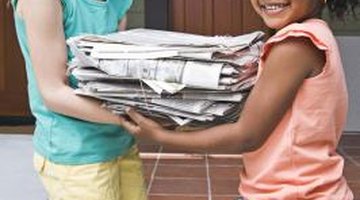


There are many environmental programs that can be instituted in the classroom and recycling is one of the easiest for primary grades. A paper recycling program can educate students about the environment, teach personal responsibility and spark an interest in community action. The impacts of these programs can reach beyond the students to their families, the community and even the planet.
Provides An Educational Boost
Implementing a paper recycling program in the classroom can invigorate the curriculum for any grade level. Lessons about recycling can integrate topics from ecology and biology to economics, social studies and mathematics. Incorporating environmental education activities like recycling has been shown to increase student achievement in reading, science, social studies and mathematics. These projects can help students enhance their critical thinking skills, leadership qualities and problem solving techniques.
Reduces Waste Service Fees
Increasing the amount of paper and other items that are recycled within a school can reap economic rewards. Goleta Union School District in Goleta, California saves up $71,000 per year by recycling. Although these schools recycle many items in addition to paper, recycling programs focusing on paper can also reduce waste and the associated waste management fees. By studying actual data from the school's waste management budget, students can see how their actions make a practical contribution to waste reduction.
Allows Students to Become the Teachers
Teaching kids to make mindful decisions about reducing consumption, reusing items, preventing litter and how to sort waste can help them make mindful decisions about sustainable living. When paper recycling habits become second nature, students often take environmental stewardship lessons home. By learning which types of paper can be recycled and how to sort recyclables based on community requirements at school, students develop the confidence to share these lessons with their families, expanding the reach of the classroom project.
Provides Community Benefits
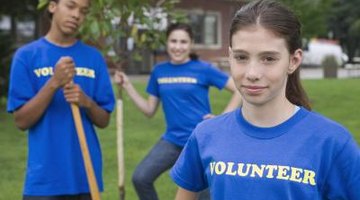
Paper recycling programs at schools can also have positive effects on the local community. For example, increased recycling at school and at the homes of the students involved in the project can increase the waste diversion rates of the entire community. This is especially important where diversion rates are mandated by local or state law. In addition, students that have participated in an environmental education curriculum often participate in after-school environmental activities that benefit the community such as community cleanups, habitat protection projects and trail building.
Related Articles





References
Resources
Writer Bio
Rory Bratcher is a writer specializing in travel with children and aquatic biology. She chronicles her adventures in family travel online. Bratcher has more than 11 years of writing experience with work featured on websites including the U.S. Bureau of Reclamation's Watershare site. She holds a Master of Science in biology from Texas Christian University.