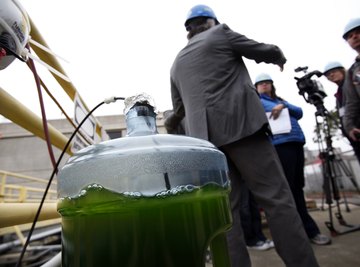
How to Make Biofuel With Algae

While heralded as the cutting-edge technology for future oil production, making biofuel is a remarkably straightforward process. The difficulty is in mass-production, with prohibitively expensive start-up costs. The will was simply not present. However, with oil prices skyrocketing and a new focus on green technologies the advent of biofuel has finally arrived. It may not be a hobbyist's activity just yet, but the mechanics of producing biofuel are easy enough for anyone to understand.

Things You'll Need

  • Algae
  • Nutrient mix
  • Oil Press
  • Hexane
  • Refinery
Show More

Instructions

    • 1

      Choose the algae that's right for you. Producing biofuel from algae is a new realm with many divergent paths. Selecting the proper algae depends upon cost, efficiency and difficulty of growth. Perhaps the most cost-effective is Chlorella, a green algae, because after lipid oil extraction the algae can be repackaged as food, expanding its usability. However, other algaes, such as Dunaliella and Botryococcus have higher lipid content, producing more oil by volume.

    • 2

      Prepare nutrients for your algae. Regardless of species, oil-producing algae all require specific nutrients for reproduction. Nitrogen, phosphorous and potassium are the three chief ingredients needed for healthy algae. Other trace elements needed to accelerate algae growth include silica, iron and chloride. While creating your own nutrient bath is possible, many start-up biodiesel companies, such as Green Star Products, sell micronutrient blends tailored to biofuel algae.

    • 3

      Construct a growing environment for your algae. The most expensive and efficient systems involve long plastic tubes with a constantly refreshing water system. However, biofuel algae can be grown in shallow ponds or even open pits of waste water. The most important considerations when producing a growing environment for algae is the presence of plenty of sunlight and medium salinity.

    • 4

      Harvest up to 90 percent of your algae crop, then sun dry. Algae populations can quickly replenish, so removing a significant percentage of the algae population will not hamper continued growth.

    • 5

      Extract the oil. While there are several methods of extracting lipid oils from algae, a combination of several different methods is the best solution for ensuring maximum yield. Begin by running the dried algae through an oil press. This can extract nearly three-quarters of the oil contained within the dried algae's cell structure. Mix the remaining pulp with hexane, an inexpensive chemical solvent. The hexane will absorb the oil, allowing for the pulp to be filtered out.

    • 6

      Refine extracted algae lipids into necessary fuel. The oils produced from algae can be transformed into a variety of different biofuels. Some, such as biogasoline, biodiesel, even biobutanol, can be used in standard gas tanks in cars available now. Refinement can also produce jet fuel, methane and vegetable oil.

Tips & Warnings

  • Hexane is very toxic and requires proper safety and ventilation. Huge shifts in pH and temperature can kill an entire crop, so carefully monitor your growing environment.

Related Searches:

Resources

Comments

You May Also Like

  • How to Make Algae into Biodiesel

    In the ever-intensifying search for the perfect alternative fuel, algae are emerging as a practical solution. The U.S. Department of Energy (DOE)...

  • How to Make Biofuel From Corn

    If gas prices get too high for you, and your automobile can run on E-85 ethanol, you can try making your own...

  • How to Make Algae Fuel

    CNN has heralded algae as the "ultimate renewable energy." Alternative energy companies have sprung up around the country to experiment with and...

  • How to Make Diesel Biofuel

    Waste vegetable oil, commonly referred to among biodiesel enthusiasts as WVO, provides the main ingredient in a fossil-fuel alternative that is safe...

  • How to Use Algae to Produce Fuel

    Algae presents a promising future alternative to current oil sources, such as soy and ethanol. An acre of algae produces 50 times...

  • Homemade Algae Biodiesel Production

    As the world's petroleum supply experiences skyrocketing prices, looking for a green way to make fuel has become more popular. Biofuel production...

  • How to Make Biodiesel From Soybeans

    In today's world, biodiesel fuel is very appealing. It burns cleanly and can be made by unwanted or wasted organic material, helping...

  • How to Use Algae As a Biodiesel Fuel

    Algae may seem like an odd option for fuel, but even the Department of Energy has caught on to algae's potential to...

  • How to Make Algae Grow

    Most people consider algae to be a problem that they may have encountered in a pool, fish tank or outdoor pond. However,...

  • How Is Algae a Biodiesel Production?

    The fuel extracted from algae is referred to as algae fuel or second generation bio-fuel. Algae are small plants or plantlike biological...

  • Biodiesel Fuel Made with Algae

    With signs of fuel shortages and the effects of global warming becoming more evident, scientists continue to search for cleaner renewable fuel...

  • What is Algae Biofuel?

    Algae produces a large amount of the oxygen in this world. But algae also transforms beautiful, crystal lakes into pits of green...

  • Algae & Biofuel Plants

    The list of plants grown for the production of biofuels is increasing at an impressive rate. While crops such as corn and...

  • How to Use Algae to Produce Electricity

    Harnessing the electricity that algae naturally produce has challenged scientists for decades. As far back as 1939, German scientist Hans Gaffron wondered...

  • How to Make Biodiesel at Home

    Biodiesel is a fuel product that is made from vegetable oil. It can be used in just about any diesel engine without...

  • How to Remove Algae in Diesel Fuel Tanks

    Diesel tanks have a tendency to attract algae if the tank is allowed to sit for an extended period of time without...

  • How to Make Biofuels at Home

    Biodiesel is a biofuel that can be made at home, even from used cooking oil. It's made to run on a diesel...

  • Biofuel From Micro Algae

    According to the National Renewable Energy Laboratory (NREL), biomass has the ability to be converted directly into a liquid fuel and this...

Related Ads

Featured