

How to Install a Rubber Pan for Shower Tile

A standard tiled shower has a layered floor consisting of a liner, called the "pan," holding a sloped cement substrate supporting the ceramic tiles. The typical shower pan liner is a rubber or vinyl sheet installed as a waterproof membrane for the shower floor, and the basic procedure for installing a shower pan insures a watertight base beneath the mortar bed and tile floor.
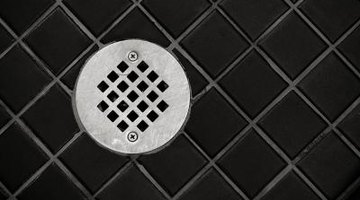
-
Cover the shower floor area with a solid layer of 15-lb. roofing paper and secure with a staple gun to the subfloor surface. For concrete slab subfloors, the roofing paper need not be secured. This paper forms what is called a "slipsheet" that maintains a separation between the shower mortar bed and the floor surface, helping minimize the risk of the shower floor cracking because of floor flexing or movement and to prevent moisture in the mortar bed from being drawn out before it has properly cured.
-
Cut a piece of expanded wire mesh to the dimensions of the shower floor with metal snips and lay the wire mesh over the roofing paper layer. For shower pans over plywood subflooring, secure the mesh to the floor with a staple gun. For slabs, hold the mesh temporarily in place with a few blocks of wood or stone that can be removed when the first layer of mortar bed is spread over the floor area.
-
Cut a hole in the roofing paper and wire mesh around the drain opening, using a utility knife and metal snips. Allow no more than 1/2 inch wider than the drain diameter in cutting the hole.
-
Install the bottom flange of the drain clamp assembly, following the manufacturer's specifications.
-
Cover the bottom drain flange surface and the drain opening with duct tape to prevent any cement-sand mix from falling down the drain.
-
Mix a damp mixture of sand and cement for the primary mortar layer of the shower floor. The mixture should be fairly dry, but dampened to allow firm packing of the floor base.
-
Spread the sand and cement mixture over the shower floor and tamp with a wood block to compact in place. Use a level to slope the compacted mixture from the drain upward to the perimeter walls no less than 1/4 inch per linear foot. This will form a sloped floor 2 inches or thicker at the wall surface down to perhaps 1/2 inch thick at the lip of the drain flange. Allow the preliminary cement-sand layer to cure for a minimum of 24 hours.
-
Spread the shower pan liner sheet over a clean floor surface and mark the shower floor measurements on the liner sheet with a marking pen. Lay out the drain location and cut a 2-inch-diameter hole at the center point, using a utility knife.
-
Measure a line 6 inches to the outside of the floor perimeter lines as the pan's "cut line" and use a utility knife to cut the pan liner to the cut line dimensions. Allow extra length at the shower dam side to enable the liner to lap over the top of the dam and down the outside face for a minimum of 3 inches.
-
Remove the duct tape protecting the drain opening and apply a 1/4-inch bead of silicone caulk around the surface of the drain flange.
-
Spread the cut shower pan liner sheet into place on the shower floor and align the drain hole. Be careful not to smear the silicone caulk as the pan sheet is positioned and lower the drain hole down smoothly over the drain.
-
Install the drain assembly's upper clamping ring over the lower drain flange. Hold the clamping ring in place and use an awl or screwdriver to align the bolt holes in the lower flange, then insert the bolts provided and tighten using an adjustable wrench to secure the clamping ring.
-
Spread and smooth the pan liner sheet outward toward the shower floor's edges, removing any wrinkles as much as possible. Fold the excess sheet edges up the wall surface and secure only at the upper edge, using the staple gun.
-
Fold each of the inside corners of the shower pan liner into a triangle, similar to a gift wrap fold, then attach the liner material to the wall framing, using the staple gun. To maintain the shower pan's water seal, never cut the pan liner material at any corners.
-
Fold the liner over the top of the shower dam area and secure with the staple gun only at the outside or upper edges. The shower pan liner installation is complete and the pan is ready for the tile backerboard to be attached to the shower walls and floor tile's mortar base to be placed in the pan.
Resources
Tips
- Before starting, check that the shower floor area is complete and ready for the shower pan installation. The subfloor material should be secured, the rough drain plumbing properly installed and solid wood block installed between the perimeter studs to approximately 8 inches above the floor surface as backing for attaching the pan liner material.
- Using a latex mortar additive in place of water when mixing the cement-sand mixture adds significant compression strength to the mortar and minimizes cracking or decomposition where the slope of the mortar bed is thinnest near the drain.
- Although inexpensive patching kits for shower pan membranes are readily available, every effort should be made to avoid cuts in the membrane that might threaten the integrity of its seal.
Writer Bio
Paul Massey has been writing since 2009, drawing on a 35-year career in the construction industry. His experience includes 15 years as a general building contractor specializing in architectural design, custom homes, commercial development and historic renovations.
Photo Credits
- Jupiterimages/Photos.com/Getty Images
More Articles

