Things You'll Need:
- New toilet flapper and valve kit
- Dye or food coloring
- Water displacement device
- WaterSense products
-
Step 1
Water conservation at the faucet.
Fix the leak at the water faucet. Leaky water faucets are responsible for wasting thousands of gallons of water a year. One easy way to determine if your water faucet has a leak is to document the reading on your water meter. Allow two or three hours to pass and read the water meter again. If there is a significant difference in the readings, you may have a leaky water faucet. If a replacement water faucet is needed, consider an environmentally responsible product which can reduce a sink's water flow without reducing performance.
Turn it off. Allowing the water to run while you brush your teeth or wash your face can waste from eight to ten gallons of water a day. Adopt the eco-friendly habit of turning off the water during these activities. -
Step 2
Water conservation at the toilet.
Determine if your toilet has a leak by dropping a bit of dye or food coloring into the water tank. You'll know you've got leaky toilet if the color seeps into the bowl without flushing. According to the EPA, toilets account for almost one-third of indoor water consumption, primarily due to inefficient toilets.
Place a plastic bottle filled with water or sand in the tank to displace some of the water your toilet uses per flush. Be sure it doesn’t obstruct the toilet mechanism.
Inspect your flappers, which deteriorate with age. If necessary, replace the flapper and valve yourself, kits are available at most hardware stores. And if your toilet is in serious disrepair and the water leak cannot be fixed easily, consider replacing the toilet with a WaterSense-certified toilet. -
Step 3
Water conservation at the bathtub.
Why not take a shower? The difference in water consumption between a shower and a bath is staggering. Generally speaking, it takes 70 gallons of water to fill a bathtub. Alternatively, a short shower requires approximately 25 gallons.
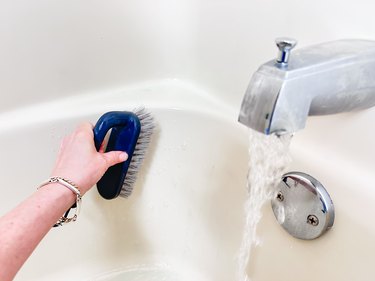
If bath time is your favorite time, don't let precious water resources go down the drain. Either adopt the eco-friendly habit of taking a more shallow bath or put the stopper in the drain and adjust the water temperature as the bathtub fills (to it's shallow water level).


Comments
ginamichellesat said
on 7/20/2009 Great article on How to Conserve Water in the Bathroom! 5 stars!
edieness said
on 6/30/2009 Useful article on How to Conserve Water in the Bathroom.
shenandoah said
on 6/5/2009 Thanks for being a moral compass on this--you are absolutely right, there is a lot we can/should do to conserve water at home. Good work!
jerryb1 said
on 5/15/2009 Excellent thoughts and suggestions to conserve water in the bathroom by not using any unnecessarily.
billips said
on 5/9/2009 Good ideas for saving water in the bathroom - thank goodness today more seem to prefer showers - B.