How to Propagate Plants Using Stem Cuttings
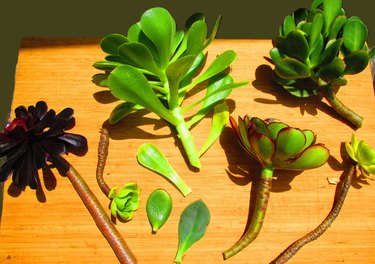
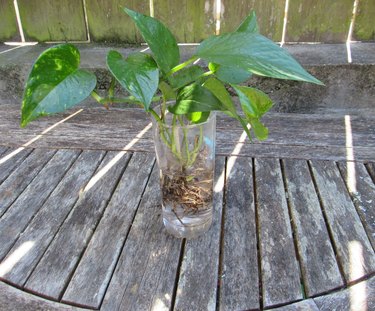
When a plant is successful in your garden, chances are you will want more of it. To save money, learn to propagate your favorite plant. Propagation is simply the production of more plants by using seeds, cuttings, or root division. Many plants can successfully be propagated using stem cuttings. These include hibiscus, wisteria, clematis, forsythia, butterfly bush and lilacs -- along with many more. In stem propagation, roots will develop from a section of stem cut from a parent plant, developing into an independent plant, exactly like its parent. Does this Spark an idea?
Things You'll Need
- Established bush or plant
- Gardening clippers
- Peat-based potting mix
- Small pots
Instructions
-
-
1
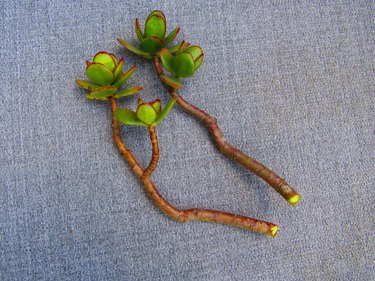
Clip a 4- to 6-inch section from current or the past season's growth on an established plant.
Stem cuttings chosen from the upper part of the plant works best. Also, cuttings taken from lateral shoots work better than those taken from terminal shoots. Remove any flowers or flower buds, so the energy can be used to produce new roots, rather than new flowers. -
2
Remove any leaves or buds from the lower third of the cutting. The leaf-free or bud-free area of the stem cutting is the part that will be put into the ground or into a pot.
-
-
3
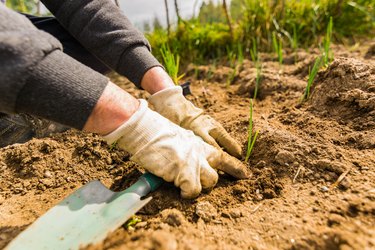
Dig a hole several inches deep and place the bottom of the stem cutting into the hole, if you are planting directly into the ground outside. Replace the soil or dirt around the newly planted stem cutting. To plant in pots, simply fill the pots with a peat-based potting mix and place the stem cutting into the soil.
-
4
Water the stem cutting moderately, inside or out. The soil should be moist, but not too wet. A spray bottle works well for watering without wetting the soil too much. While waiting for the stem cutting to root, continue watering as the soil becomes dry, but be careful not to over-water. You should see new growth in about a month. However, rooting time varies with the type of cutting, the species being rooted, and environmental conditions.
-
5
After new growth is present, you may move the rooted stem to a permanent location, or you may allow the propagated stem to remain in its current location. If you potted your stem cutting, allowing the new rooted stem cutting to grow larger might be a good idea before planting it into the ground.
-
1
Tips & Warnings
Some more fragile stem cuttings may root better if planted in a pot until new growth develops.
Dip stem ends in plant hormone powder before inserting into soil to encourage faster rooting.
Cover potted cuttings loosely with a plastic bag to help maintain the necessary moisture level.
References
- Photo Credit http://images.google.com
Comments
View all 11 Comments-
lin-z
Apr 15, 2009
Great article. I can't wait to try this. -
Julie McMurchie
Apr 10, 2009
Great instructions on how to propagate plants using stem cuttings. -
Carol McKenzie
Apr 10, 2009
Great article. I'll have to try this in my garden. Thanks. -
JimboJambo
Apr 06, 2009
My Mom used to do this all the time, but I could never replicate her success. I guess i was missing a couple of steps. Great article. -
sunshine11219
Apr 05, 2009
beautiful pictures and good gardening tips