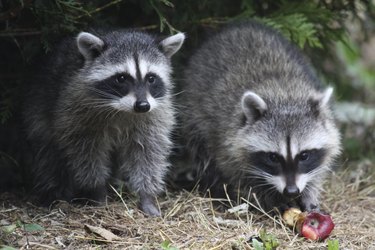
The best way to protect fruit trees from squirrels, raccoons, and birds is to soften your attitude and be willing to share. Wildlife can be a joy in a garden if a homeowner has the right attitude. In any event, even if you employ a combination of repellents, scare tactics, and barriers, you aren't likely to meet with 100 percent success.
Make an Attitude Adjustment
Video of the Day
Before you get too focused on excluding wildlife, be sure you are up on current laws. U.S. federal laws protect most wild birds, their nests, eggs, and young, including those on private property. Some squirrel species are protected, and laws about squirrels and raccoons vary by state. Many states prohibit trapping wild animals and releasing them in a different location.
Video of the Day
Consider that many gardeners love to watch the wild birds flock to their ponds or feeders. Squirrels can be amusing gathering nuts. Obviously, there has to be a certain limit to what you share with wildlife in your orchard, but cutting them off completely is not possible, even if it were desirable.
Take Steps to Reduce Wildlife
If you decide that you just don't want birds in your yard, you can remove sources of food, water, and cover. You can accomplish this by keeping all dog and cat food indoors. Although you could cut off all sources of water as well, this seems unnecessarily harsh since every creature needs to drink.
Cutting back brush near the fruit trees will reduce nesting sites and cover for birds, but it's not likely to stop them from coming in for ripe cherries. Pruning nearby trees and removing structures near fruit trees limits squirrels' aerial highway access.
Deter Wildlife With Scents and Repellents
Several items can be used to try to deter animals. Not all are effective. Blood meal — reputed to repel raccoons — doesn't keep them away for long, however, and no commercial repellents have been proven to keep them away.
If you want to try repellents, the best strategy is to rotate different products because raccoons and squirrels are quick to notice that no threat is connected with the products' aromas. Commercial formulas contain ingredients that suggest danger or irritate the sensitive noses of garden pests; the ingredients include synthetic predator scent, capsaicin, and rotten eggs. Spray the repellent on the fruit trees and reapply it after a rainfall.
Use Devices to Frighten Animals
Reflective products, such as scare-eye balloons and bird tape, often are used to scare birds, and they may startle invading squirrels and raccoons too. The shiny tape makes a crackling sound in wind. Scarecrows, model owls with bobble heads, and devices that emit hawk screeches or electronic distress calls also deter birds. Use more than one scare tactic, and move the devices every few days so the invaders don't become accustomed to them.
Apply Barrier Protection
Bird netting is fruit trees' best defense against birds. Use plastic mesh that has 1/4- or 1/2-inch-diameter holes. Although squirrels can gnaw through bird netting, it offers some protection against them too. Leaving corn or nuts out for squirrels while the trees' fruit ripens may distract them from the trees. For maximum protection, erect a wooden frame — four legs with crossbars connecting the legs at their tops — around each fruit tree, and lay bird netting over each frame to keep birds from pecking the outer fruit. Bird netting is reusable.