Lye is a potentially dangerous ingredient commonly found in both commercially produced and homemade soaps. Lye can cause serious burns to the skin, blindness, and if ingested, death. Furthermore, lye-free soap is usually gentler on the skin, which makes it ideal for people with sensitive skin. Thankfully you don't have to use lye when making your own homemade soap.
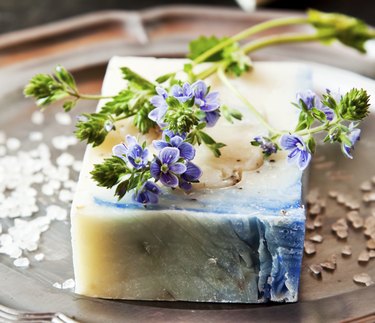
Video of the Day
Things You'll Need
Three to four 4-ounce bars glycerin melt-and-pour base
Sharp knife
Microwave-safe bowl
Microwave
Stirring utensil
Essential oils
Soap mold
Cheese grater
Bar of unscented soap
Small pot
3 quarts soft water
Pump bottle dispenser
Bar Soap Recipe
Step 1
Cut three or four 4-ounce melt-and-pour base bars into small cubes. The cubes should measure about an inch. Place the cubes into a microwave-safe bowl and set inside a microwave.
Video of the Day
Step 2
Heat the soap base on high for 45 seconds. Stir the melted soap base. Place back in the microwave and heat on high for an additional 10 seconds and stir if the soap base hasn't completely melted. Continue heating the soap base at 10-second intervals –- stirring after each additional heating –- until the cubed melt-and-pour soap base has melted.
Warning
As a safety precaution, use pot holders when removing the bowl from the microwave. This will help prevent burns.
Step 3
Add essential oils if desired to the melted soap base and stir thoroughly.
Tip
Lavender essential oil, for example, has a calming and relaxing aromatherapy effect, while lemon essential oil has an uplifting effect.
Step 4
Pour the melted base slowly into the soap mold. Set the mold in a location away from direct heat and sunlight. Leave the mold undisturbed for at least three hours before carefully popping the soap out of the mold and using.
Liquid Soap Recipe
Step 1
Grate a bar of unscented soap.
Tip
Pure castile bar soap works great for homemade liquid soaps.
Step 2
Fill a small pot with 3 quarts soft water. Add the grated bar soap to the water-filled pot and set on the stove.
Step 3
Bring the water to a boil, stirring continuously. Turn the heat off and continue stirring until the grated soap is melted and well incorporated into the water.
Warning
The hot liquid can cause severe burns, so always handle with care and use pot holders to prevent accidents.
Step 4
Add 1 teaspoon of essential oil to the liquid soap mixture and stir thoroughly. Transfer the homemade liquid soap to a pump dispenser and use as needed.