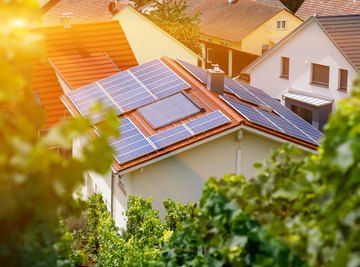

When the sun shines on the Earth, it provides light and heat, which is called solar energy. Solar energy makes plants grow and provides food to eat and oxygen to breathe. The advantages of solar energy are that it provides heat and electricity. The disadvantages of solar energy are not all days are sunny, and a lot of money is required to be spent on solar panels to bring the energy of the sun into our homes.
Solar Thermal Energy - Pro
Heat from the sun, or solar thermal energy, heats houses, the water for showers, swimming pools, greenhouses and other buildings. Thermal energy simply means "heat" energy. The advantage of solar thermal energy is that it reduces the cost of energy bills to heat homes. Energy bills can be very expensive, so using the heat of the sun and relying less on energy companies to heat homes saves consumers money.
Solar Panels - Pro
Solar panels are panels that are placed outside on the roof, on a pole or on the ground to collect the sun's light and turn it into electricity. Solar panels can be very small like the ones used in calculators or very large panels used in power plants that provide electricity for entire towns. The advantage of using solar panels is that the panels help the environment by reducing the amount of coal the electric company burns. When companies burn coal, hazardous gases go into the environment.
Reliability - Con
Even though there are many advantages to using solar energy for heat and electricity, solar energy cannot be used alone. Sometimes the sun does not shine depending on location, the time of year or weather conditions. On those days when the sun shines less, less heat and light from the sun are received. At night, when the sun goes down, battery backups are required on solar panels. It is still necessary to get electricity from energy companies to provide a backup for periods without full sun.
Cost - Con
Money is saved on electric bills by using solar energy, but solar panels are still a necessary investment. The costs of attaching solar panels are very high. Sometimes large, expensive solar panels are required on homes to accommodate the amount of energy used. Large batteries are attached to solar panels to provide electricity when the sun goes down at night or on cloudy days. These batteries are very expensive too. The cost of solar panels and batteries to charge them are strong disadvantages to using solar energy.
References
Resources
About the Author
Erika Marie started writing in 1996 and has covered a variety of topics, including arts, crafts, and home and garden. She holds a Bachelor of Arts in art from Rowan University.