If you want the performance of your chainsaw to be at its peak, then regularly cleaning and adjusting the carburetor is a necessity. Not only does this help extend the life of your chainsaw, it also keeps it in top working condition. Although you can take it to a professional to have the work done, you can also clean and adjust the carburetor at home in just a few simple steps.
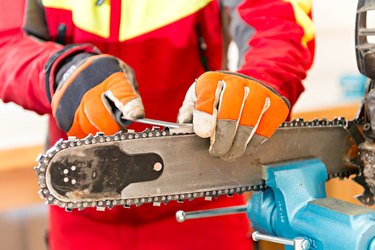
How to Clean a Chainsaw Carburetor
Just like the carburetor on your car, the carburetor on your chainsaw helps get gas to the engine so it can operate. By mixing small amounts of fuel with the air that enters the engine, the carburetor supplies your chainsaw with gas and helps the engine run properly.
Video of the Day
Video of the Day
In order for this to happen, there can't be any clogs or blockages in the carburetor. The first thing you want to do is check the air filter for any dirt or clogs. You may be able to clean it or, if not, replace it with a new one. Next, you will want to remove the carburetor and drain it. If you discover that the carburetor is blocked or clogged with a gold or brown colored gummy residue, you will want to clean out the carburetor and all of the parts that go along with it.
Use a spray made for carburetors and a small brush to clean the outside of the carburetor. Once this is complete, you will need to remove the adjustment needles, diaphragm and cover plate. Pay attention to the order you did this in so you know how to put it back together; referring to the diagram in your operator's manual will be helpful here. Spray the cleaner into the holes under the diaphragm and needle adjusters. Repeat this step with the air intake to clean the throttle. Once this is complete, you can reassemble the unit. There are several resources online that walk you through this process.
How to Adjust a Chainsaw Carburetor
The manufacturer of your chainsaw will have specific directions on how to tune that model. However, there are some universal standards when it comes to adjusting a carburetor on a chainsaw.
After you have cleaned or replaced the air filter and made sure the gas tank is at least half-full, the next thing you can do to adjust the carburetor is balance the high and low speed screws. As soon as your chainsaw is warm, check to make sure the high and low speed screws are turned completely in. Then, back each screw off to the left in one full turn (this may vary depending on your manufacturer's instructions). Next, turn the high speed screw clockwise. This will lean out the fuel mixture. Finally, turn the high speed screw to the left until a flutter is heard. You now have the right RPM for your chainsaw.
Another quick test or adjustment involves the throttle. Make sure your chainsaw is on idle. Check to make sure the chain is not moving. If it is, turn the throttle screw counterclockwise until the chain stops.
One expert swears by the roll-over test. The idea is to turn the saw into different positions while it is idle (make sure the chain brake is engaged). You will immediately hear if the saw is getting too much fluid because it will stall. If this happens, turn the low speed screw clockwise and repeat.
When in doubt, it's always a good idea to visit the manufacturer's website for more detailed instructions and how-to videos on adjusting your chainsaw carburetor.