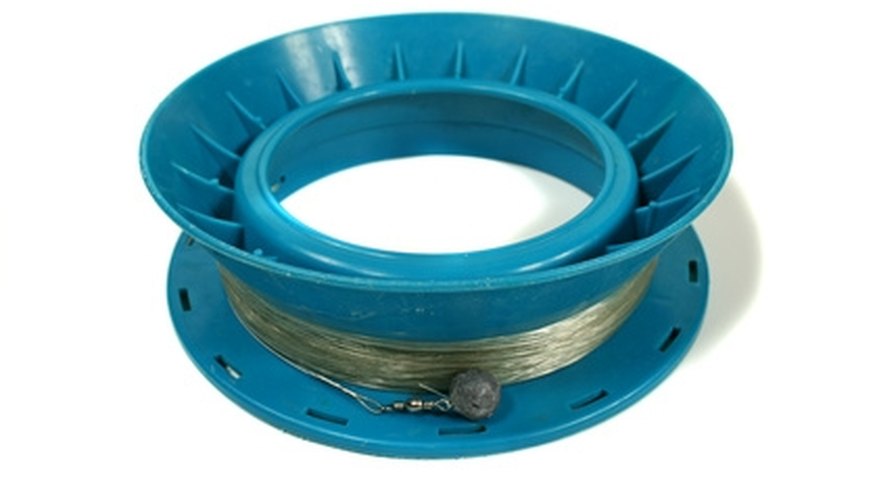



Barrel swivels are classified as part of the terminal gear that an angler may use while fishing. Terminal refers to various sinkers, hooks, snaps and swivels used to rig the line so that a bait or lure can be presented to a fish. Swivels are typically made of metal and commonly found in silver or black. Barrel swivels feature two connecting eyes that are attached to each other by a rotating barrel or cylinder in the middle. Barrel swivels act as a connection point and help reduce line twist especially when using spinning gear.
Items you will need
Fishing rod with matched reel
Monofilament fishing line
Barrel swivel
12- to 18 inch-length of monofilament leader
Cut a 12- to 18-inch length of line from the end of your main line to use as a leader. The length of the leader will vary based on personal preference and the type of fishing you will be doing. Also consider using a heavier pound-test length of line when fishing for larger game fish species in fresh- and saltwater.
Attach a barrel swivel to the end of your main line with a Uni knot. Form the Uni knot by holding the barrel swivel in one hand and the fishing line in the other. Pass six to seven inches of line through one of the barrel swivel eyes.
Wrap the free end of the line around the eye and back through the same way it went before. Turn the free end up and along side the main line. Form a loop with the free end along side the main line. Make the loop about two inches long to give yourself enough room to work.
Wrap the free end around the main and free-end lines three to four times. Form the turns around the lines and pass the free end through the loop you formed earlier. It is important to pass the line through rather than around the loop.
Pull the tag end to snug the knot. Moisten the knot with water or saliva and pull the knot down tight. Pull the main line to move the knot down the line and lock it against the eye of the swivel.
Repeat the process to attach the leader length to the opposite eye of the barrel swivel. Attach a hook or lure to the free end of the leader length.
Tips
- Rig your line in this manner as a means to attach a length of leader and help reduce line twist. Add a sliding egg weight, bank weight or pyramid sinker to the main line followed by a bead before attaching the swivel. This will create a Carolina-style rig that allows the bait to be presented without the weight directly attached.
References
Tips
- Rig your line in this manner as a means to attach a length of leader and help reduce line twist. Add a sliding egg weight, bank weight or pyramid sinker to the main line followed by a bead before attaching the swivel. This will create a Carolina-style rig that allows the bait to be presented without the weight directly attached.
Writer Bio
Keith Dooley has a degree in outdoor education and sports management. He has worked as an assistant athletic director, head coach and assistant coach in various sports including football, softball and golf. Dooley has worked for various websites in the past, contributing instructional articles on a wide variety of topics.