

Homemade Pet Safe Floor Cleaners

Homes with pets must be cleaned carefully, as pets may often be unable to resist the temptation of tasting the floor cleaner. This makes it important to use pet-safe floor cleaners that will both protect the pets and avoid expensive veterinarian bills.
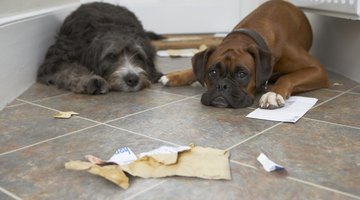
Luckily there are a few simple homemade household products that will clean any floor type, keep your pets safe, plus save money.
Vinyl, Tile and Stone Floors
To create a disinfectant floor cleaner for vinyl, tile and stone floor types, mix a gallon of warm water with a cup of distilled white vinegar. The vinegar will clean, disinfect and deodorize. The vinegar is nontoxic and safe for pets. In fact, this type of vinegar can be sprayed onto a pet's coat, or added to the water dish, to act as a natural repellent for fleas and ticks. Dip a mop in the cleaning solution, wring out excess water and mop over the floors. Allow to air dry.
Hardwood and Laminate Floors
The same basic solution can be used for hardwood and laminate floors but should be diluted a bit more to prevent damage to the flooring. Use only half of the vinegar for these type of floors, this time mixing one-half cup of distilled white vinegar with one gallon of warm water. Dip a mop in the solution, wring out excess water and mop over the floors. To prevent oversaturation, dry the floors immediately after cleaning by wiping with a clean cloth or dry mop.
Products to Avoid
There are also a few products that are all-natural, yet harmful to pets, that should be avoided at all costs. Ammonia is highly effective in cleaning and disinfecting, yet can be toxic if ingested, especially in pets. If using any retail floor cleaning product, read label ingredients to be sure ammonia is not an ingredient.
Borax is another effective way to clean floors but is harmful if ingested. If using any commercial product, be sure that borax is not a listed ingredient.
The Drip Cap
- Homes with pets must be cleaned carefully, as pets may often be unable to resist the temptation of tasting the floor cleaner.
- The vinegar is nontoxic and safe for pets.
- Dip a mop in the cleaning solution, wring out excess water and mop over the floors.
- If using any retail floor cleaning product, read label ingredients to be sure ammonia is not an ingredient.
References
Writer Bio
Mel Frank is a professional freelance writer with over 15 years of writing experience. She has completed a wide variety of writing assignments for a number of publications that include CNN and various websites. Frank received a Bachelor of Fine Arts from a prestigious university in Pennsylvania.
Photo Credits
- Michael Blann/Digital Vision/Getty Images
- Michael Blann/Digital Vision/Getty Images
More Articles

