
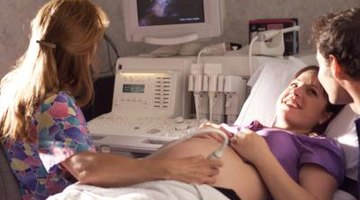

An ultrasound sonographer works in doctors’ offices, clinics and hospitals, helping to diagnose conditions. These technologists use equipment that can see specific areas inside the human body that healthcare professionals could otherwise only see with surgery. You will typically attend at least two years of school, but you may need to take prerequisite coursework before you can begin a program.
Prerequisites
You will need a high school diploma or GED prior to applying to an ultrasound program. Although each college will have a slightly different set of perquisites, in most cases you will need to take human anatomy and physiology, and some colleges may require you to complete advanced classes. Other courses you may need might include medical terminology, advanced math and sciences. Some programs may also require courses in writing since ultrasound sonographers must have strong written communication skills.
First Year
Each program will vary in courses and requirements, and, depending on the school, you may attend class the entire year, including summers. However, you can expect the first year of your ultrasound education to include an introduction to sonography, which will begin training you in the use and care of the equipment. You may also need specific coursework in related anatomy, such as the abdomen, breast, heart and circulatory system.
Second Year
In the last phase of your education, your program may require that you take advanced coursework in imaging and anatomy. The program will also require a certain number of clinical hours for you to gain hands-on experience as you work with patients alongside practicing ultrasound sonographers. During clinicals, you may meet at designated times to discuss your experiences in class. At the end of your clinical experience, your instructor may test your knowledge with a hands-on test to gauge what you learned throughout the program.
Specializations
Many ultrasound programs offer specialty tracks that allow you to take additional courses during or after your general ultrasound coursework. Options may include vascular, breast and abdomen. These specializations may involve additional classes relating to the specialty, as well as additional clinical experience.
Related Articles





References
Writer Bio
Kate Beck started writing for online publications in 2005. She worked as a certified ophthalmic technician for 10 years before returning to school to earn a Masters of Fine Arts degree in writing. Beck is currently putting the finishing touches on a novel.