

Ideas to Recycle Large Bathroom Mirrors

In many homes, outdated bathroom mirrors get tossed in the trash or donated to thrift stores. Instead of throwing out your old mirrors, make use of them by repurposing them into new projects for your home; because large mirrors are expensive, you can save a significant amount of money by recycling them.
Faux Window
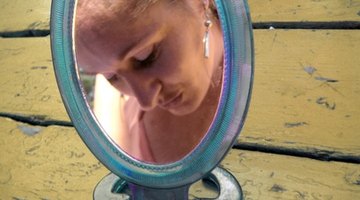
Combine a bathroom mirror with an antique window frame to create a stylish wall hanging that will reflect the space in your home, making it feel larger. Look for a window frame that suits the style of your home; add a textured finish to enhance the feeling of age. Choose a multipaned window frame to create a more geometric, visually interesting look. Attach the mirror behind the frame using heavy-duty glue and metal clips. You can hang the entire assembly on the wall to give the impression of a window; when used in a small space, your mirror window can reflect light and make the area look more open.
Mirror Tiles
Make use of the large surface area of a bathroom mirror and have it cut into mirror tiles that can be used in other projects. Bring the mirror to a home supply store or a window store with a glass cutter, which is a safe method and will ensure that you make the best use of the mirror. You can use square mirror tiles to create a backsplash in the bathroom or kitchen, or have the clerk at the window store cut it into larger squares or circles for a decorative wall hanging. Before taking the mirror in to be cut, draw out your design on plain paper, and lay the cutouts on top of the glass to ensure they will fit.
Garden Mirror
Break traditional rules, and use your old bathroom mirror in an outdoor space. Mirrors work particularly well in the garden where the reflected plants and flowers will give a sense of a more lush space. Hang the mirror on a fence, and put a flower box in front of it to create the impression of a window through the fence, which is particularly effective in a very small garden. For an illusion that will make passersby look twice, remove the frame. mount the mirror on a sturdy wooden stand and stand it up in the middle of a garden. The mirror will reflect the plants around it, and the frameless appearance will make it seem to disappear and reappear, depending on the angle of view.
Mosaic
If you are not superstitious, make a mosaic out of an old bathroom mirror. Break the mirror, using a hammer and a metal spike to control the break lines. Try to get the glass to break in an interesting pattern with a variety of large and small pieces. Find a piece of lightweight wood that is slightly larger than the original mirror, and paint it a solid color. Arrange the mirror pieces on the board, leaving a space in between so that the color shows through. Glue the pieces down, and hang the mosaic on the wall for an interesting, fractured reflection.
References
Writer Bio
Elizabeth Smith has been a scientific and engineering writer since 2004. Her work has appeared in numerous journals, newspapers and corporate publications. A frequent traveler, she also has penned articles as a travel writer. Smith has a Bachelor of Arts in communications and writing from Michigan State University.
Photo Credits
- mirror,mirror... image by Catabu from Fotolia.com
More Articles

