
How to Make a Regulation 8' X 24' Soccer Goal
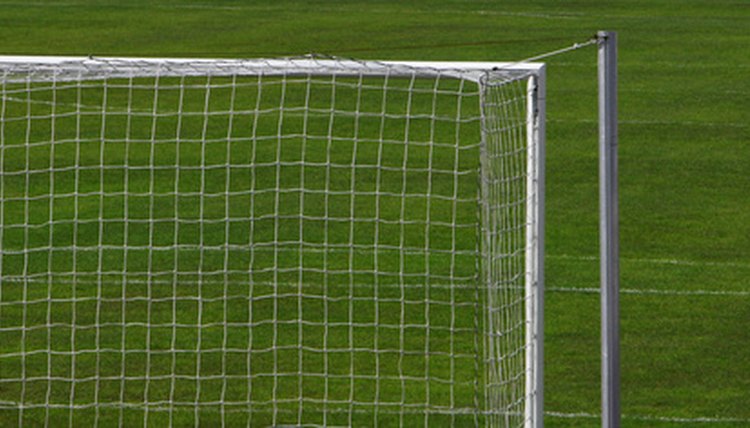
A goal is essential for the game of association football. Apart from the ball, it is the only thing needed to play a game of soccer. This simplicity has helped make it the most popular sport in the world. Despite of the practicality of goals consisting of two rocks or dustbins, however, a proper match should be played between two goals made in accordance with the official Fédération Internationale de Football Association regulations.
Anchor the two 9-foot bars safely, burying an end of each 1 foot below ground. The goalposts should be safe for the players in conditions of severe wind or even from their own actions, such as when leaning on them or kicking the ball towards the posts.
Attach the crossbar, nailing it to the two vertical posts if it is wooden, or welding it if they are made of metal, using a ladder. If you are not a professional, it would be wiser to avoid doing this alone, or opting for the safer wooden choice. Either way, the official regulations permit both materials.
Begin attaching the side 8-by-3-foot nets. If you opted for metal bars, it would be better if you attached small rings for the net. On a wooden bar, you might as well nail the net to attach it firmly on the post.
Continue with the attachment of the upper net, this time connecting the nets together. It shouldn't be a difficult task; you can use stings to hold them together.
Connect the rear net with the two side parts and the upper net. When finished, the net of your goal will be ready, but it will be hanging from the crossbar, interfering with the goalkeeper.
Attach the two 10-foot bars behind the goal, 6 feet away from it. Also make the distance between these bars slightly bigger than the goal's vertical posts.
Connect the top of the 10-foot bars with the two points of the net where the side, upper and rear parts meet, using a string.
Paint the goalposts white, which the regulations explicitly mention as their mandatory color.
Tips
While it is not obligatory by FIFA's regulations, you might want to attach the net to the ground to avoid the ball sliding beneath it on low shots. You can do this by tying it on a firmly placed, slim wooden or iron bar.
References
Tips
- While it is not obligatory by FIFA's regulations, you might want to attach the net to the ground to avoid the ball sliding beneath it on low shots. You can do this by tying it on a firmly placed, slim wooden or iron bar.
Writer Bio
Tasos Vossos has been a professional journalist since 2008. He has previously worked as a staff writer for "Eleftheros Tipos," a leading newspaper of Greece, and is currently a London-based sports reporter for Perform Sports Media in the United Kingdom. He holds a Bachelor of Arts in communication and media from the University of Athens.