

How to Bend PEX Tubing

PEX pipe is a semi-flexible water-supply pipe that is useful for many applications. From general plumbing to radiant heat floors, PEX is a go-anywhere plumbing solution. Bending PEX tubing is a snap, but you have to remember to strap the tubing into place so the bends will stay where they need to.
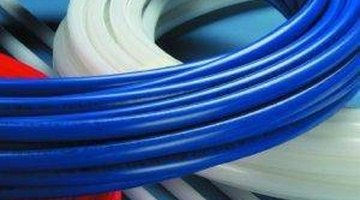
You can also use PEX hangers to accomplish this.
-
Run a length of PEX tubing along your intended path. Allow sufficient slack in the tubing to create a 12-inch S-curve or a 12-inch diameter loop in the tubing.
-
Place a PEX strap or a PEX hanger over the PEX tubing while allowing the tubing to move (because the tubing will expand and contract depending on temperature variations). Then create either an S-curve or a loop in the tubing with the slack that was left in the tubing and hold the S-curve or loop in place with another PEX strap or PEX hanger.
-
Continue running the tubing to its intended termination points and install fittings as necessary.
The Drip Cap
- PEX pipe is a semi-flexible water-supply pipe that is useful for many applications.
- Then create either an S-curve or a loop in the tubing with the slack that was left in the tubing and hold the S-curve or loop in place with another PEX strap or PEX hanger.
Writer Bio
Josh surprisingly found himself as an English Literature major one day after planning on becoming a doctor for most of his life. He graduated with a BS from Utah Valley University in April 2003.
Photo Credits
- http://www.plumbersurplus.com/images/prod/5/Zurn-Q4PC500XRED-rw-48919-13175.jpg
- http://www.plumbersurplus.com/images/prod/5/Zurn-Q4PC500XRED-rw-48919-13175.jpg
More Articles

