Wiring a 100-amp circuit breaker box can be a challenging task and should involve an electrician's approval regardless of how comfortable you feel with the project. It can be a very dangerous undertaking and must be performed by a professional. Locating the main breaker box and opening it is as far as you should go without an electrician's supervision.
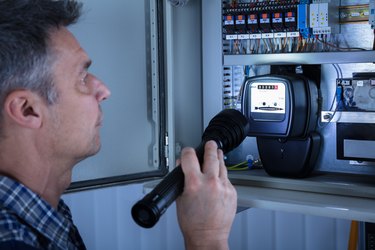
Assessment
To put things into perspective, a 100-amp breaker box is usually used for a condo or two-bedroom apartment. This amount of voltage should provide you with enough power to use all the main functions of a smaller dwelling without blowing any of the breakers. A 100-amp subpanel is sometimes added to bigger houses that usually have a breaker box of 200 amps or higher.
Video of the Day
Video of the Day
Before the electrician begins touching any wiring, he'll first assess the breaker box that's already installed in the dwelling. This main breaker box is what the 100-amp subpanel will be attached too. In order to attach a breaker subpanel, there must be two or more available slots in your main breaker. If there aren't any available slots, the electrician must reconfigure certain wires in order to provide the extra space.
Electrician Required
When it comes down to the actual work, it's always best to allow an electrician to handle the details to ensure that the subpanel is properly installed and there won't be any electrical surprises along the way. The electrician will first turn off the main breaker so their safety is guaranteed throughout the project.
The electrician will plan the route the wires will take to the breaker subpanel as well as strip any wires necessary to allow for the best connection possible. He'll then connect the wires to the subpanel terminals and the main breaker, making sure the connection is complete. The electrician will also bring all the tools and materials necessary for adding the subpanel, so finding the right size wire for the 100-amp subpanel shouldn't be your concern.
Final Result
The main breaker shouldn't look much different than before – the exception being the addition of the new subpanel. This addition can come in the form of two old slots in the breaker box that are now filled or a whole new box next to the main one. It will all depend on what the electrician sees when opening the main box and how much rewiring needs to be done in order to add the subpanel. All the breakers should still function perfectly once the electrician has restored power to the main breaker box. If you have any doubts about how the subpanel functions, don't tamper with the breaker box, simply ask the electrician to explain to ensure your safety.