eHow launches Android app: Get the best of eHow on the go.

How To

How to Maximize Fuel Efficiency

Member
By Jyle Dupuis
User-Submitted Article
(2 Ratings)
Maximize Fuel Efficiency

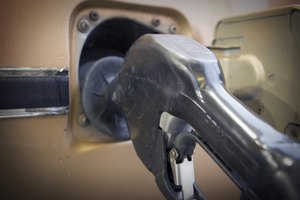
Are you getting the most out of your car, or are you spending more than you should? Chances are your car is robbing you of precious fuel. Most vehicles on the roads right now are burning more gas than needed. That means more for your wallet and the environment. Follow these simple steps to get your car back to running as efficiently as possible.

Difficulty: Moderately Easy
Instructions

Things You'll Need:

  • Spark Plugs
  • Air Filter
  • PCV Valve
  • Oxygen Sensor
  • Tire Pressure Gauge
  • Fuel Cleaner Additive
  1. Step 1
    Check Tire Pressure
    Check Tire Pressure

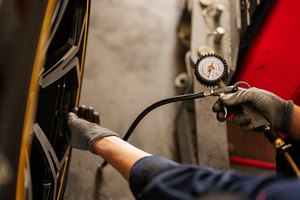
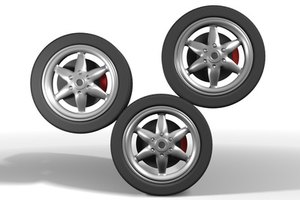
    Most of a vehicles energy can be lost just by having improperly inflated tires. Your first step is to always make sure the tires are properly inflated. To do this you need to invest in an accurate tire-pressure gauge. Follow these simple rules for tire pressure accuracies.

    * Tires will expand and contract depending on the weather. So as a rule of thumb check your tires for every weather or season change.

    * Know the proper pressure. Over-inflating a tire can be just as bad as under-inflation. The Tire pressure specific for you car IS NOT the Max Tire Pressure on the tire. Instead, check your car's manual or sticker on the drivers-side door panel.

  2. Step 2
    Avoid Traffic
    Avoid Traffic

    Nothing will destroy you vehicles' efficiency worse than driving in traffic. If you can avoid traffic do it. Try car pooling or taking the train - just stay away from places where you will have to crawl around at slow speeds. It will not only burn more gas, it will causes your vehicle to overheat and breakdown prematurely. Avoid traffic at all costs!

  3. Step 3
    Maximum Efficiency Speed
    Maximum Efficiency Speed

    Something most people don't know about cars is that every vihicule has a maximum efficiency speed. What this means is that when out on the open road there is a speed by which you can cruse that will give you the maximum fuel efficiency. This is different for every car so learn what the speed is for your vehicle. This is not conventional wisdom that can be obtained from your local dealership so you may have to dig deep. For example, I know that for my 2004 Dodge Caravan it's speed efficient speed is between 80-90 km/hr.

  4. Step 4
    Clean Air Filter
    Clean Air Filter

    Changing/cleaning the air filter is one of the easiest ways to ensure that your vehicle is running efficiently. Filters are inexpensive and should be replaced every four months. That of course depends on where you live. Dustier areas may require more frequent changes.

    If you want to take it a step further, consider Hi-Performance Air Filters. They are made of fabrics instead of paper which allows more air-flow and are reusable. Increased air flow means more power and fuel efficiency. They are a little pricey but it may be worth it in the long run.

  5. Step 5
    Oxygen Sensors
    Oxygen Sensors

    If you've ever seen your Check Engine light turn on it's most likely the O2 sensor. The sensors job is to read the amount of oxygen flowing out of the engine through the exhaust pipe. Depending on its reading it will tell the main computer to add more or less fuel to keep the air/fuel mixture performing at its best. The O2 sensor should be replaced if it starts sending false information to the computer. You should see a proper service technician for troubleshooting Engine sensors.

  6. Step 6
    Spark Plugs
    Spark Plugs

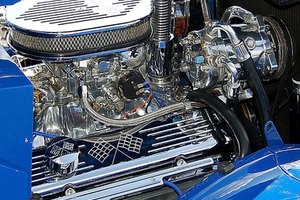
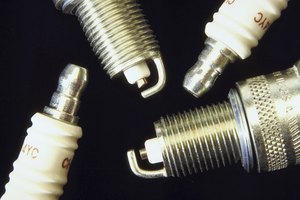
    The spark plugs job is to create the spark that ignites the air-fuel mixture in your engine. Sometimes over time the plugs get dirty and should be replaced. When replacing ensure that they are the righ ones for you vehicle type.

    Not all spark plus are created equally - usually the more expensive spark plugs ignite the gases faster and more efficiently. This could translate into more horsepower and better fuel efficiency.

  7. Step 7
    PCV Valve
    PCV Valve

    The PCV Valve is a small plastic part that is usually attacked with a hose and located on top of the rocker cover. Being so small it may seem insignificant but it has a very important job. It takes whatever gases that were not burned inside of the engine and sends it back to be burned again. If the PCV Valve were not to operate properly gas buildup inside of the engine would be lost and eventually find its way into the atmosphere. Replacing the valve is easy - if you need help locating it consult a professional.

  8. Step 8
    Fuel Injector Cleaner
    Fuel Injector Cleaner

    Fuel injectors spray a mist of gas into the engine. Sometimes over time their misting ability turns more into squirting or trickling if they get clogged with silt. While some mechanics would recommend replacing them, the truth is that they can be fixed quite easily. They just need a good cleaning. Add a bottle of Fuel Injector Cleaner into a full tank of gasoline. Once you're out on the highway give the engine a few good hard throttles to really push the gas through the injectors. Always obey the speed limit though. After a few weeks you vehicle should be running better than ever.

  9. Step 9

    Not as important for vehicles as it is for planes, though it will still rob you of your fuel efficiency. Keep the windows closed, especially at higher speeds. Instead, consider using the indoor fans to get clean outdoor ventilation.

  10. Step 10

    Have your service technician test your car for proper wheel alignment. Sometimes after hitting a hard bump things can get screwy with the tires - so have them tested and make certain they're all straight. The last thing you want is one tire pulling you left while the other goes right.

    Also, make sure that your tires are in good condition and balanced properly. An unbalanced tire will shake at specific speeds and will disturb the overall driving quality of the vehicle.

Tips & Warnings
  • Some of these steps might be better suited for a professional technician. Unless you know what you are doing better see the pro's.

Comments  

lovelights said

Flag This Comment

on 9/4/2009 Very informative. Well written too. 5*

Post a Comment

Post a Comment
  • Have you done this? Click here to let us know.
I Did This

Related Ads

Get Free Cars Newsletters

Copyright © 1999-2009 eHow, Inc. Use of this web site constitutes acceptance of the eHow Terms of Use and Privacy Policy.   en-US Portions of this page are modifications based on work created and shared by Google and used according to terms described in the Creative Commons 3.0 Attribution License.

eHow Cars
eHow_eHow Cars