eHow launches Android app: Get the best of eHow on the go.

How To

How to Know The Signs of a Tornado

Member
By bar10dr98
User-Submitted Article
(14 Ratings)
How to know the signs of an approaching tornado
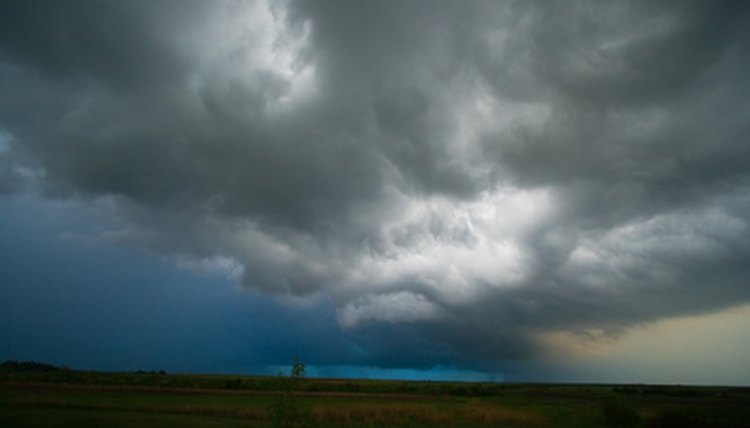
http://www.sxc.hu/photo/720080 pabloroda

Tornados often strike with very little or no warning, and leave behind massive amounts of damage. Often, local news stations or NOAA Weather Radio will put out an alert that conditions are favorable for the formation of tornadoes, known as a Tornado Watch. When doppler radar has indicated the formation of a tornado, or one has been spotted on the ground, the Tornado Watch will then go to a Tornado Warning. Not all tornados are this predictable, and knowing the signs of a tornado are important. Here's how you can know the signs of a tornado.

Difficulty: Moderately Easy
Instructions
  1. Step 1

    Keep abreast of local weather by checking doppler radar in your area. A tornado often is spouted from very bad thunderstorms, and can usually be predicted by watching how a thunderstorm performs on radar. A tornado often results when a cold front is trying to pass into a warm front, but gets trapped above the warm air mass. In this case, you will see a line of thunderstorms, with a strong red leading edge. Watch for spots on the radar where a patch of red is close to a patch of green, this is often where tornados form. You may access local news stations websites, The Weather Channel's website, or download software such as WeatherBug for access to doppler radar.

  2. Step 2

    Tune into a NOAA Weather Radio for tornado watches and warnings for your area. Not all tornados form in a predictable pattern, so keep your eye to the sky. Often, there is a calm before the storm, where the air feels hot, sticky, and oppressive. The sky will have low dark clouds, often with a sickly green cast to it. You may see an orange hue to the clouds on the horizon where the warm and cold fronts meet. Sometimes it storms badly just before a tornado strikes, producing strong gusty winds and large hail. If you have pets, their behavior may change before a tornado strikes, cats are usually nowhere to be found and dogs may seem especially anxious.

  3. Step 3

    The most predictable weather sign of an approaching tornado by all means is the sound. An approaching tornado is often likened to the sound of a train. A really big and loud train. Even more than hearing the sound, you will feel it. It is a low rumbling sound that seems to shake the Earth, the building you are in, and your very soul. When you are in an area that may be hit by a tornado and you hear this, take cover immediately. If you have a basement, a safe place to ride out the tornado is generally under the steps, as it provides more protection than an open space. If a basement is not available, take cover in an inside room, or a lay down inside a bathtub, covering your head. If you can cover yourself with a mattress to help protect from falling debris, do so. Keep your cell phone handy, as your home phone line may not work following a tornado.

  4. Step 4

    Wait until you are positive the tornado has passed before coming out of your safe place. You will know by the sounds, it will generally get very quiet after a tornado has passed. The weather will probably be much colder, and it may be raining. Power lines often come down in a tornado, and still will have enough electricity to kill anybody who touches them, so stay clear of any downed lines. If you smell a gas leak, leave the area immediately. Survey the tornado damage to your house and neighbors, and make sure everybody came through the tornado okay. Use a cell phone to call 911, or flag down emergency personnel. They often arrive on the scene of a tornado within minutes.

  5. Step 5

    If you live in a mobile home and are under a tornado watch, seek shelter in another building or storm shelter. A friend's house or a local business are good places to take cover. Don't look at approaching tornados, as people are often hypnotized by the sight and don't seek shelter quick enough. If you see one coming, take cover IMMEDIATELY. Don't try to outrun a tornado in a car if possible, they move quickly and very are unpredictable.

Tips & Warnings
  • Leave a radio with batteries near your safe place in case of power outages, so you may be aware of more severe weather approaching.
  • A NOAA Weather Radio will have more often updates than your local radio station.
  • Download weather radar software, such as WeatherBug, to have instant access to doppler radar on your computer. Cell phones often have this available, as well.
  • Tornados often form as a result of a Tropical Storm or Hurricane, most frequently in the north east quadrant of the storm.
  • Tornados often strike at night, when you cannot see them. At this point, you will have to rely on doppler radar, weather alerts, and listening for the sounds of a tornado.

Comments  

| View All 15 Comments

monica82 said

Flag This Comment

on 8/4/2009 I could have used these tips when I was living in Oklahoma! Actually, they had a good warning system so you always knew it was coming. I was always scared to death of them though!

Susang6 said

Flag This Comment

on 7/4/2009 I reside in Tornado Alley...your advice is excellent. Everyone needs to know the signs. Your article will save lives.

Flag This Comment

on 6/6/2009 Good tips to read before you need them. Good advice to steer clear of tornadoes.

ddare8 said

Flag This Comment

on 5/6/2009 great stuff!

novalove said

Flag This Comment

on 4/10/2009 Wow, I never knew any of this. A very enthralling article. I really enjoyed the descriptions. 5*

Subscribe

Post a Comment

Post a Comment

Related Ads

  • Have you done this? Click here to let us know.
I Did This
Get Free Health Newsletters

Copyright © 1999-2009 eHow, Inc. Use of this web site constitutes acceptance of the eHow Terms of Use and Privacy Policy .   en-US Portions of this page are modifications based on work created and shared by Google and used according to terms described in the Creative Commons 3.0 Attribution License. † requires javascript

Live Strong Partner
Livestrong_eHow Health