
Items you will need
Welding tools
Scrap metal or pre-made trailer parts
Lumber
Bolts
Screws
Hinges
Underslung parts
Warnings
Be sure your trailer is built to the specifications required by state or national governments if you plan to use it on public roads.
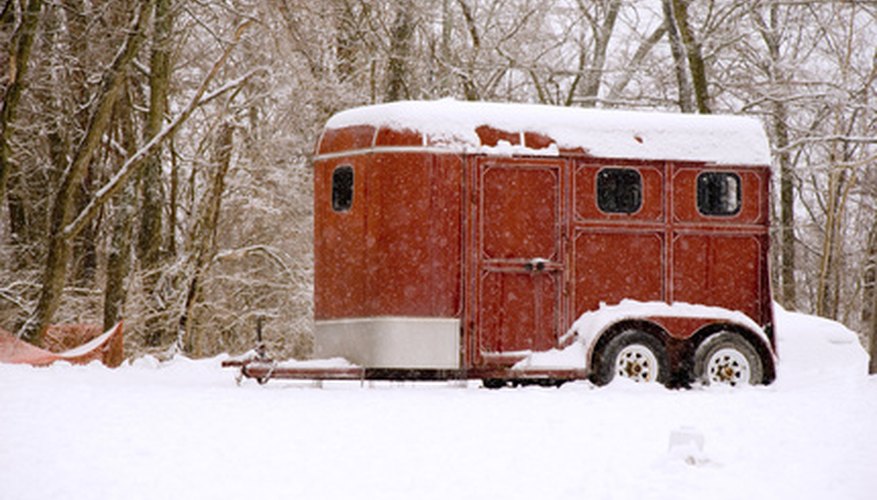
Let’s face it, modern highways are not designed for herding livestock, which is why anyone with large farm animals such as horses, cows, or goats needs a proper livestock trailer. Whether you are trying to save money or are looking for a challenging do-it-yourself project, it is possible to build your own livestock trailer. You will need a welder and lots of usable scrap metal. You also should consult governmental transportation agencies to ensure your trailer will conform with legal requirements for over-the-road use.
Build the Base, Axle, and Undercarriage
Build a base for the trailer using appropriate scrap metal or pre-made parts. Securely weld the pieces together.
Attach a pre-made undercarriage below the base. The undercarriage should include suspension components.
Build a tongue for the trailer with the scrap metal or pre-made parts. Weld the tongue to the front of the base.
Weld or bolt a ball-hitch coupler to the trailer tongue.
Weld safety chains on either side of the tongue.
Hang a pre-made axle on the trailer through the undercarriage. Attach the wheel and break assemblies.
Sides, Roof, Gate and Floor
Weld multiple pieces of scrap metal together to create the frame for the sides and front of the trailer box.
Weld the side frames to the base. Drill holes at the corners so that the sides can be bolted to each other, or weld them together. Cover the sides with lumber or sheet metal.
Make a gate for the rear of the trailer by welding more scrap metal together. Create two equal doors that, when placed side-by-side, will completely cover the opening. Attach hinges on each side of the trailer, in the back where the gates will be fixed. Alternately, install a drop gate that can be lowered to double as a ramp.
Drill holes in the gate doors so that they can be bolted or screwed to the hinges. Attach the gates to the hinges. Run a chain through the middle of the gate. A padlock can be used to hold the doors shut.
Weld a solid piece of sheet metal to the top of the trailer, to give the structure a roof. Drill holes in the planks of the base and lay a wooden floor inside the trailer. Bolt the planks to the base.
References
Warnings
- Be sure your trailer is built to the specifications required by state or national governments if you plan to use it on public roads.