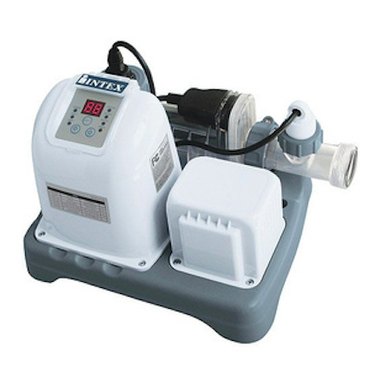
A saltwater swimming pool uses a chlorine generator to transform ordinary salt (sodium chloride) into chlorine, which sanitizes the water. In saltwater pools, the generator uses electrolysis to continuously produce free chlorine, which means you don't need to add additional chlorine to the water. For this reason, a saltwater pool is much easier and more economical to maintain than a traditional chlorine- or bromine-treated pool.
Another advantage of a saltwater pool is that it burns off chloramines (the combined chlorine that produces the unpleasant chemical odor in pool water), much the way a traditional chlorine shock does. Although they generally require less maintenance than traditional pools, a saltwater pool should still be monitored to make sure it maintains the proper chemistry. A low chlorine level may occur if there is insufficient salt in the system, if the setting on the saltwater generator (SWG) is too low, the pool has too much sun exposure or if the water is diluted with rainfall.
Video of the Day
Video of the Day
Here are the routine steps for maintaining a saltwater swimming pool and making sure chlorine levels remain safe.
Step 1: Clean Debris Regularly
Clean debris from your saltwater pool daily. Foreign substances in your pool water can change the pH of the water.
Step 2: Test for Free Chlorine
Test the free chlorine level in your saltwater pool weekly. Chlorine should be maintained at 1.0 to 3.0 parts per million. Adjust your chlorine generator to run for shorter or longer periods of time if the free chlorine level is lower or higher than these levels.
Step 3: Test for pH
Test the pH of your saltwater pool weekly. The pH should be maintained at 7.2 to 7.6. Lower pH can cause corrosion of the pool, filter and generator. Higher pH levels can cause scaling, which is unsightly and can prevent your chlorine generator from functioning. Several chemical treatments are available at pool stores to increase or decrease pH levels.
Step 4: Check Salt Levels
Check the pool's salt level periodically. The salt level should be maintained at 2,700 to 3,400 ppm for best results. You may need to add additional salt once or twice a year, or more often if you experience heavy rainfall or need to replace water due to splashing.
Step 5: Shock the Pool When Needed
Shock your saltwater pool after very heavy use -- as in a pool party -- or if the water becomes cloudy. You can use a regular chlorine shock treatment for this step. Some chlorine generators include a "super-chlorinate" feature that temporarily increases the amount of chlorine produced.
Step 6: Clean the Generator Cell
Remove and clean the chlorine generator cell once every three months. Use a hose to rinse away mineral buildup (scaling), or scrape it off with a plastic or wooden tool. If you are unable to remove the scale, soak the cell for a few minutes in a mixture of one part muriatic acid and four parts water.