

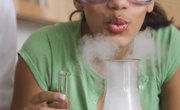
High school or secondary school chemistry classes help a student to better understand the intricacies of the world, both visible and invisible to the naked eye. It reveals how elements react, why natural events occur and other useful skills.
When attending a chemistry class, there will be a bevy of equipment and instruments on hand to use in experiments and to study reactions as well as to keep students and staff safe from the results of reactions and experiments.
Before a student begins to operate in the science lab, a teacher may ask him to fill out a high school lab equipment worksheet to familiarize him with each item and what it does. In this way, the student is better prepared to use the equipment and to communicate with lab partners during important parts of a project.
High School Chemistry Lab Equipment List
The equipment in a lab is specialized for this sometimes dangerous area. A high school chemistry lab equipment list is long and has a wide range of products. A list may vary with each lab. However, the basic list includes:
- Safety equipment
- Heating elements
- Measuring equipment
- Glassware
Safety Equipment in Chemistry Labs
A chemistry lab is home to many potions, solutions and elements that are harmless on their own. However, once the class begins to interact with these materials, the chemistry lab can be a somewhat dangerous place. The safety equipment on hand should include:
- Wraparound safety goggles for eye protection
- Gloves appropriate to the chemicals, solutions or heating elements with which the student is working
- Eye solution and sterile eye cups in case a splash of an irritant manages to get into an unsuspecting student’s eyes
- Wash station with soap and sanitized cloths or paper towels
Equipment for Measurements
The study of chemistry requires exactness. To be exact, students will need to measure and note the amounts of material or the amount of heat they are using at each step of a project. For that important purpose, the lab should be equipped with many different types of measuring tools, including:
- Balances
- Thermometers
- Rulers
- Measuring cups
- Measuring spoons
- Volumetric flask
Heating Element Equipment
How materials react to differing temperatures is a major part of a science or chemistry class. There are specialized heating elements designed for experimenting with volatile materials. A list of basic heating element equipment includes:
- Bunsen burners
- Heating mantles
- Melting point apparatus
- Hot plates
Glassware Equipment for Science Class
Due to its nonreactive state, glassware is preferred for experiments over metal or wood. Porcelain crucibles or thick-sided cups that can handle heat without breaking down are also ideal. Glassware, plasticware and porcelain items for chemistry class come in many shapes and sizes. The list includes:
- Test tubes
- Funnels
- Bottles and jars with tight-fitting lids
- Burettes
- Pipettes and droppers
- Graduated cylinders
- Beakers
- Flasks
- Mortar and pestles
- Evaporating dishes
- Spot plates
Where to Buy Chemistry Lab Equipment
There are many online retailers that sell lab equipment for a public, private or home school chemistry lab. Do your research before buying items from a retailer. The quality of the product matters when experimenting with sometimes volatile materials.
An entire chemistry lab set with Bunsen burner and a small cache of beakers and funnels is a relatively affordable item for one student who is ready to experiment at home or for a teacher looking to expand the equipment list for students.
A qualified retailer will have chemistry lab equipment names and pictures so that you are sure you are purchasing the correct items.
Related Articles

References
Writer Bio
Kimberley McGee is an award-winning journalist with 20+ years of experience writing about education, jobs, business trends and more for The New York Times, Las Vegas Review-Journal, Today’s Parent and other publications. She graduated with a B.A. in Journalism from UNLV. Her full bio and clips can be seen at www.vegaswriter.com.