

Definition of Directional Light

Table of Contents
Directional lighting simply means lighting that travels in a specific direction. While general lighting provides even, overall illumination, directional lighting highlights a specific object or work surface. It is also usually provided by a stronger light source.
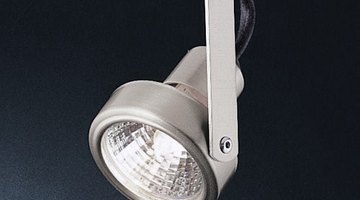
Used alone or in conjunction with other types of lighting, directional lighting is an important part of a successful lighting scheme. There are several types of directional lighting, including accent lighting, recessed down lighting and track lighting.
Accent Lighting
Accent lighting is probably the most common form of directional lighting. It creates drama and sets the mood in a space by highlighting special objects, such as paintings, sculptures, architectural features or other focal points. These fixtures are typically adjustable, so you can move them as necessary. Accent lights usually have small openings, from 3 to 5 inches, to create a focused beam of light.
Typically used in foyers, dining rooms and living rooms, accent lighting is appropriate for special occasions as well as everyday use.
Recessed Down Lighting
Recessed down lights, often referred to as can fixtures, are installed in the ceiling so that their housing is concealed from view. The light is angled down as the name implies.
These inconspicuous fixtures are a good choice when you want to create minimal visual disruptions in the ceiling plane for an ultra-modern look or when the ceiling is too low to install a traditional light fixture. Some recessed fixtures come with an adjustable head, but all down lights provide a more even form of directional lighting as opposed to the focused, intense accent lights. If recessed fixtures are spaced evenly across the room, the light level should be consistent.
While recessed down lights often have a commercial look, they can be used in residences successfully. Recessed down lights are often used in kitchens, bathrooms and even living spaces.
Track Lighting
Track lighting is the most flexible form of directional lighting. Tracks are mounted on the ceiling and track heads slide into place. The heads can be moved and aimed in nearly any direction. There are a variety of styles of tracks and track heads, but the effect is usually quite modern.
This type of directional lighting is a good choice when fixtures cannot be recessed into the ceiling because of the construction (such as a concrete ceiling). However, if ceilings are particularly low, track lighting might not be the best option.
Track lighting is popular in galleries, living rooms and contemporary kitchens. It has become an acceptable source of lighting for residential applications.
Bulb Types
Just as there is a variety of directional lights, there is a variety of bulbs that you can use in these fixtures. While incandescent is the most common type, it is also possible to use fluorescent of LED bulbs. There are several factors to consider when it comes to bulb type. How much light do you need? What color? How much energy should it use and how long should it last?
Incandescent bulbs provide a warm light, and they are the most inexpensive option. However, they burn out the fastest and use the most energy, making them less environmentally friendly. Fluorescent bulbs provide a clean, white light and are also relatively affordable but have a much longer life than incandescent lamps. LEDs (light emitting diodes) are on the forefront of lighting technology. They usually have a blue-white appearance, but they come in a variety of colors. They also have an extremely long life, but they are expensive and hard to find.
Considerations
A successful lighting scheme should utilize a variety of lighting sources. General lighting is needed for everyday tasks, while directional lighting supports tasks such as reading and working as well as highlighting important features of the space. A successful lighting scheme is also a flexible one. If one component of the system is off, such as the general lighting, the other light sources should still create an interesting effect.
While directional lighting is available from most major home improvement retailers, consider consulting a lighting designer for advice on fixture placement, bulb types and light levels.
Writer Bio
Dorian Gray has been a full-time freelance writer since 2009. She has written extensively on the topics of architecture and design for national magazines such as "Architectural Record" and regional publications such as "At Home in Arkansas." Gray also writes about the topics of beauty, health, nutrition and travel. She holds a Bachelor of Architecture from the University of Arkansas.
Photo Credits
- ylighting.com
- ylighting.com
More Articles

