How to Use Old Tires to Raise Potatoes
Some people think they don't have room to grow vegetables, but there are many that can be raised in a limited amount of space--even in pots. Potatoes are one of the easiest yet most neglected crops in the vegetable garden. Even most gardeners think that potatoes take a lot of space and work, but there are easier, space-saving ways to raise this delicious crop. And fresh potatoes are delicious, just like anything else you raise yourself. Five tires and 3 lbs. of seed potatoes can yield 30 lbs. of potatoes! Try it and give yourself a treat. Does this Spark an idea?
Things You'll Need
- Certified seed potatoes
- Sprouting kitchen potatoes (if necessary)
- Garden soil
- Fertilizer (optional)
- Nails
- Hammer
Instructions
-
-
1
Pick out the largest tire from a set of four old ones. Use the hammer and a nail to pierce one sidewall in many places, to allow drainage. This will be the bottom side of your bottom tire.
-
2
Cut your seed potatoes in halves or quarters. Make sure there is at least one "eye" on each piece; two is better. If you are using kitchen potatoes, each piece should have at least one sprout. Allow these pieces to sit in the kitchen for a day or two--long enough to develop a bit of a skin on the cut surface.
-
-
3
Pick a sunny place for your potatoes. Loosen the soil slightly to encourage drainage. Put your bottom tire in place, bottom side down. Nail the inside bottom rim of the tire to the ground. You can also prop it open with stakes or nails. Fill the tire with good garden soil (not compost), then fill the center hole, level with the top of the tire.
-
4
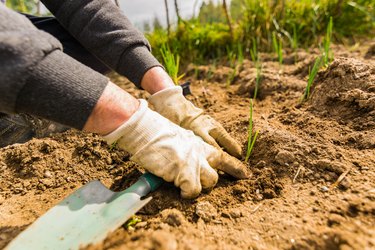
Plant your potato pieces 2 inches deep, three to four of them in a tire, spread apart around the circle. Firm the soil over them. Water them well, then allow them to sit undisturbed so the plants can grow. Meanwhile, gather more soil and choose the next largest tire. Place the second tire on top of the bottom tire, but don't do anything with it yet. Water your plants only when the soil dries out. Potatoes don't need a lot of water.
-
5
When your potato plants get to be about 2 inches taller than the second tire, fill the tire with dirt as before (being gentle around the growing plants). Use long nails to prop open the rim, or nail the rim to the top rim below it. Last, gently fill the area in the center around the plants, leaving two sets of leaves above the surface of the soil on each plant. The areas of the plants that are covered will form new roots and more potatoes. Firm the soil. Water thoroughly again.
-
6
Continue these steps with two more tires, for a total of four. Water when things look dry. Allow the plants to grow over the sides of the tires. When the first flowers appear, dig carefully through the dirt of the first couple of layers for new potatoes. Don't take too many, but don't miss this special treat. Allow the vines to keep growing. Potato vines are one of the most beautiful plants in the vegetable garden.
-
7
Know that, when the vines start to yellow and die, the potatoes are almost ready. Stop watering. Allow the vines to turn brown and dry. Now you can either disassemble your tower and harvest your potatoes or leave them as they are and harvest as desired. They should keep fine, but it's best if they don't freeze. Store in a dark, dry, cool place with plenty of air circulation.
-
1
Tips & Warnings
Plant potatoes in the spring and summer in northern areas. In warm-winter areas, you can grow in the fall and winter. Fertilize lightly if you like. Allow one to two tablespoons of low-nitrogen fertilizer (2-8-8, or any with a low first number) per layer of dirt. Allow at least two leaf sets to show each time you add a tire. Don't neglect your potatoes, but don't over-water them. Stop watering as soon as the plants appear to be yellowing. Green potatoes are poisonous in large amounts. Discard them, especially if you are feeding children.
Don't expose your potatoes to light for more than an hour or two, to keep them from turning green. If you see white butterflies around your potatoes, start looking for large green caterpillars and pick them off the undersides of the leaves. Don't pick too many new potatoes, or you won't have enough big potatoes. Don't allow your stored potatoes to become warm or moist. Than tells them it's time to grow sprouts. Don't use a lot of compost in your soil. You'll grow a lot of leaves and few potatoes. Keep tobacco away from your plants and off your hands before you handle them. Remember that potato plants are poisonous.
Resources
- Photo Credit www.saundersallotment.co.uk, pics.davesgarden.com
Comments
View all 15 Comments-
mfahrney
Feb 02, 2009
I read this in a garden book years ago and forgot how to do it..thanks for reminding me!! -
mfahrney
Feb 02, 2009
I read this in a garden book years ago and forgot how to do it..thanks for reminding me!! -
kkemp
Jan 17, 2009
Who knew? Thanks for the info! -
kkemp
Jan 17, 2009
Who knew? Thanks for the info! -
Write Now
Dec 27, 2008
how cool. thanks, 5