eHow launches Android app: Get the best of eHow on the go.

How To

How to Start Breeding Angelfish

Member
By Bryan Cass
User-Submitted Article
(5 Ratings)
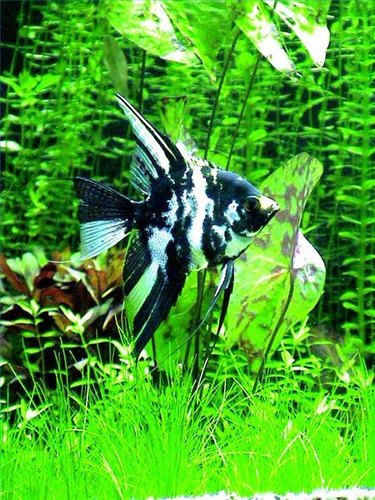
Breed the beautiful Freshwater Angelfish, Pterophyllum scalare

The freshwater Angelfish is one of the most common and recognizable tropical aquarium fish. Are you interested in breeding Angelfish in your own tank? Or maybe did your Angelfish lay eggs and you don't know what you do?? Well, that's how I started, and it ended up being a hobby that paid for itself. Here is how I began breeding Angelfish...

Difficulty: Moderate
Instructions

Things You'll Need:

  • 10 to 20 gallon tank
  • 5 gal. tank
  • 2 sponge filters
  • Air pump
  • 2 aquarium heaters
  • Small clay pot
  • A brine shrimp hatchery kit
  • 5 Angelfish
  1. Step 1

    SET UP YOUR TANKS -- Breeding Angelfish is easiest if you try to meet certain water conditions. Water that is moderately soft and neutral to slightly acidic would be best, although Angelfish will breed in varying conditions. Set up your tanks and add water and a sponge filter in each. Run the sponge filter with just the upside down pot and nothing else in the tank for several weeks to cycle the water and start bacterial colonies. You can speed the process by adding water from an established fish tank. Keep water temp at 76 to 78F.

  2. Step 2
    My current community tank with Angelfish.  They may breed in this tank -- on that driftwood.
    My current community tank with Angelfish. They may breed in this tank -- on that driftwood.

    INTRODUCE YOUR FISH -- Put about 5 Angelfish into the large tank; this will ensure that you will have at least one pair of fish. Change about 25-30% of the water once per week.

  3. Step 3

    CONDITION THE FISH -- Bring the Angelfish into spawning condition by feeding as much meaty foods as they will eat, but no more. I have used white worms, grindal worms, brine shrimp and even small earthworms. I have some articles on how to raise some of these foods. You can also get freeze-dried worms or frozen brine shrimp at your pet store.

  4. Step 4

    WATCH FOR SPAWNING BEHAVIOR -- When a pair of breeding angelfish are ready to spawn, they will chase the other fish away from a certain part of the tank, usually near the pot. Then they will begin to meticulously clean an area on the pot to prepare it for egg laying. You should remove any fish other than the two that are spawning at this time.

  5. Step 5

    WATCH FOR EGGS -- When ready to lay eggs, the female will show a rounded tube and the male a pointed tube near their vents. The female lays the eggs and the male follows behind and fertilizes them. When the egglaying is complete, you have a choice. You can leave the parents in the tank to tend to the eggs and fry, or remove the eggs and hatch them. I usually removed the eggs because many times the parents ate all the eggs before they hatched.

  6. Step 6
    Angelfish parents with fry who have just started to swim.
    Angelfish parents with fry who have just started to swim.

    TEND TO THE EGGS -- If you opt to leave the eggs and parents together, nothing more need be done until the eggs hatch and the fry are free-swimming. If not, then remove the pot and place it into the 5 gal tank. Place the sponge filter or an airstone close by the pot so that water is gently circulating past the eggs. They should hatch in 48 to 72 hours at a temperature of about 80F.

  7. Step 7
    The fry should always have a full, orange belly from eating newly hatched shrimp.
    The fry should always have a full, orange belly from eating newly hatched shrimp.

    FEED THE NEW FRY -- When you begin to see little wiggling tails on the eggs and the eggs drop down to the bottom, that is the time to start hatching brine shrimp for their food. The Angelfish will become free-swimming several days after that and you want to start feeding them as soon as they begin to swim. Change about a quart of water every other day.

    Keep new shrimp cultures going, and feed the fry the newly hatched shrimp 4 times per day for the first month. Slowly introduce flake and other foods at that time.

  8. Step 8
    Can you see the little Angelfish baby in this picture?
    Can you see the little Angelfish baby in this picture?

    SELL YOUR BABY FISH -- Once the Angelfish are about nickel to quarter sized, they are ready to sell. Many times, local pet stores will welcome locally-raised fish because they are generally more healthy and acclimated to the local water supply. You can generally expect to receive about 1/4 to 1/2 of the retail price per fish you sell. Ask the store manager or owner if they are willing to buy your fish for either cash or for store credit. It's a great way to subsidize your hobby! :-)

Tips & Warnings
  • Water quality is critical. Be sure to do weekly water changes.
  • Live or frozen foods are essential for proper conditioning of breeding Angelfish.
  • Angelfish fry are very sensitive to water quality and temperature.

Comments  

-BCass said

Flag This Comment

on 11/28/2008 Yes, it is easier to concentrate on one particular species of fish, or at least one biotope. Try just Amazon River basin fish in a tank -- angelfish, tetras, corydoras, pencilfish, hatchetfish. They all come from the same area and live in generally the same water conditions. That way you won't be trying to keep fish that live in soft, warm water with fish that live in cool mountain streams! :-)

dlcass said

Flag This Comment

on 11/27/2008 I have seen this person's tanks and can vouche for his effective methods. He really earned money doing this!

Flag This Comment

on 11/27/2008 Thanks for the tips. I tried to have fish before, but I think I was too diverse.

Post a Comment

Post a Comment
  • Have you done this? Click here to let us know.
I Did This

Related Ads

Get Free Pets Newsletters

Copyright © 1999-2009 eHow, Inc. Use of this web site constitutes acceptance of the eHow Terms of Use and Privacy Policy.   en-US Portions of this page are modifications based on work created and shared by Google and used according to terms described in the Creative Commons 3.0 Attribution License.

eHow Pets
eHow_eHow Pets