Things You'll Need:
- Vegetable seeds
-
Step 1
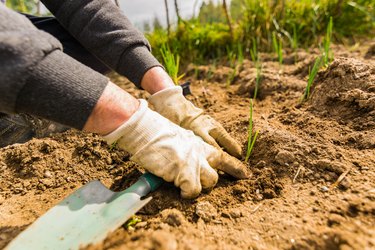
Have loose, loamy soil with plenty of depth to allow roots to penetrate deeply to take up enough nutrients to allow the plant to reach its maximum potential. The more compost and other organic material you add to your soil, the better nutrition your plants will grow.
-
Step 2
Dig a 10-by-10 foot garden, enough room to plant a few rows of easy-to-grow vegetables, or prepare several large container pots with a mixture of loamy soil enriched with compost. Make certain the soil is deep enough for good root penetration. Keep your garden spot away from trees since they have a vast root system that extends their entire width. Tree roots suck up copious amounts of water, and your vegetable garden will suffer.
-
Step 3
Plant marigold flowers around the perimeter of your garden spot to deter rabbits from dining on your vegetables. Mixing horse manure into your garden soil is said to deter deer from browsing on your succulent new shoots.
-
Step 4
Tie garden twine to sticks and use that as a guide to keep straight rows while you are sowing your garden seeds. Radishes should be planted 4 inches apart in one row. Zucchini seeds should be planted sparingly in a small garden, since they spread easily and will take over; they need a space of at least 2 square feet each.
-
Step 5
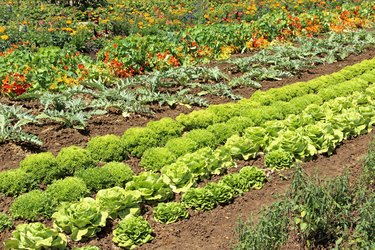
Plant kale seeds in one row about 1 foot apart. Kale grows tall, and as long as it gets enough water, it doesn't require any special attention. Lettuce may be sown in a row; any variety grows well, especially Simpson's Elite, which is a lovely bright green color and seems to have no enemies.
-
Step 6
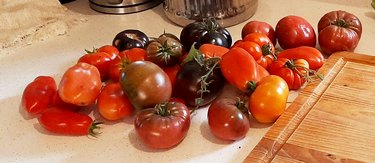
Sow tomato seeds. Cherry tomatoes work well in containers or in a small garden. Larger varieties, such as Big Boy, require much more space to spread out, and they need staking. Your cherry tomato plants may need staking or cages to climb up and around, depending on their variety.


Comments
angma said
on 6/9/2009 Cherry tomatoes can get up to 14 feet tall... an EXTREMELY mistaken assumption is that they can be grown in containers. They are generally very large plants. That little speck of misinformation makes me want to disregard this entire article. Do some research next time, please. My black cherry toms and yellow pear toms are already 4 ft. tall and continue to grow. Their root systems are already huge. Other than "dwarf" or "patio" varieties (in general) putting tomatoes--especially indeterminate varieties--will lead to a very sad and root bound plant.