
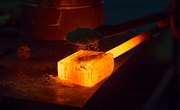
Hardening steel with motor oil is a way of performing what is called the case hardening of steel. Pure steel is actually too soft for many applications. In order to put a hard layer on the steel, carbon must be fused at the molecular level into the top centimeter or so of the steel. One way to do this is to make the steel red-hot, then plunge it into motor oil. The carbon in the motor oil bonds with the top layer of red-hot steel molecules and forms a tough outer covering on the steel. One last step is necessary, however, before your hardened steel is ready to work with.
- Steel
- Vat
- Motor oil
- Torch
- Heavy protective clothing
- Tongs
- Eye protection
- Heavy protective gloves
If you wish to harden your steel to a deeper level, you can reheat it to red-hot after the first oil bath and give it a second oil bath. After the second oil bath, continue from Step 3.
Have a fire extinguisher ready in case the oil catches fire when the red-hot steel is introduced. If the oil should catch fire, simply drop the steel item into the vat and use a fire extinguisher or place a lid over the vat to smother the fire.
Heat the steel using a torch or a furnace with bellows. Continue until the steel glows red-hot. Work in a well-ventilated area and wear protective clothing, heavy gloves and eye protection.
Pick up the red-hot steel with your tongs and immediately immerse it into the motor oil. Allow the steel to remain in the oil for approximately 30 to 60 seconds.
Remove the steel from the oil and wash the item using dish soap and water. Be careful not to drop or strike your steel, as it will be brittle at this stage (much like glass), and could shatter.
Reheat the now-clean steel until it is blue-hot. Blue is the color steel turns just before it becomes red-hot.
Pick up the blue-hot steel with your tongs and immediately immerse it in a vat of room-temperature water. Allow the steel to cool in the water. Your steel is now case-hardened. The outside layer of steel will be at least 40 percent harder than when you started, and your steel will be malleable, rather than brittle like glass.
Things You'll Need
Tips
Warnings
Tips
- If you wish to harden your steel to a deeper level, you can reheat it to red-hot after the first oil bath and give it a second oil bath. After the second oil bath, continue from Step 3.
Warnings
- Have a fire extinguisher ready in case the oil catches fire when the red-hot steel is introduced. If the oil should catch fire, simply drop the steel item into the vat and use a fire extinguisher or place a lid over the vat to smother the fire.
About the Author
Larry Parr has been a full-time professional freelance writer for more than 30 years. For 25 years he wrote cartoons for television, everything from "Smurfs" to "Spider-Man." Today Parr train dogs and write articles on a variety of topics for websites worldwide.