Things You'll Need
Soap recipe
Newspaper or surface protection
Stove or heat source
Kitchen scales
Measuring cups
Coconut oil
Vegetable oils
Lye
Distilled water
Stainless steel or unchipped enamel pot
2 plastic pitchers
2 kitchen thermometer(s) that read as low as 100 degrees
Wooden spoons
Safety glasses
Chemical-resistant gloves
Protective clothing
Shallow pan (glass, plastic or enamel)
Petroleum jelly
Parchment baking paper or white plastic trash bag
Thin cardboard
Blanket
Freezer paper, butcher paper or plastic needlepoint screen
Large bowls
Ice water
Warm water
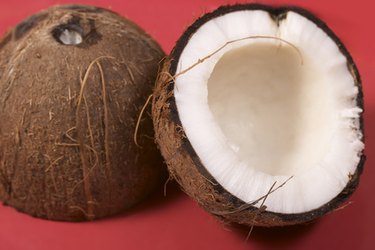
Saponification is the chemical reaction of fats with a caustic catalyst such as sodium hydroxide, or lye, which produces the substance we know as soap. Coconut oil is a commonly used ingredient in soap and produces a relatively hard bar and a fast creamy lather with large, short-lived bubbles. Because coconut oil alone can be drying to the skin, it most often is used in combination with other fats and oils in making soap.
Prepare the Chemicals
Step 1
Cover working surfaces with several layers of newspaper. Don protective gear – this is not an option. Lye is extremely caustic and causes severe skin and tissue burns. Grease your mold with petroleum jelly or line it with baking parchment paper or a plastic trash bag. Cut a thin piece of card board slightly larger than the mold as a cover.
Video of the Day
Step 2
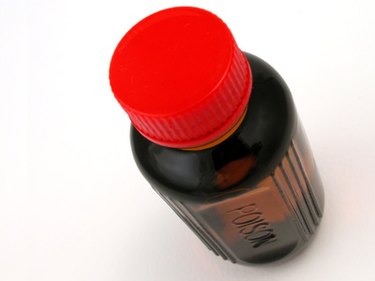
Measure the dry lye crystals into a plastic pitcher and the distilled water into a separate pitcher. Working on a stable surface, carefully pour the water into the lye. Avoid splashing. The lye solution will become very hot. Avoid breathing the fumes directly, as they can burn the lungs. Allow the solution to cool.
Step 3
Measure coconut oil and other fats and place in soap pot. Heat the oils only until melted, not much above 105 degrees. Once melted, allow the oils to cool to reach 105 degrees-Fahrenheit. Now comes the tricky part. Both the lye-water and oil must be at 100 degrees F., when they are mixed together. If necessary, place the containers in bowls of ice water or warm water to align the temperatures. Remove them from the water baths when both reach 100 degrees F.
Step 4
Use the edge of the soap pot to steady the lye-water pitcher against as you pour a thin stream of lye solution into the oil. Stir constantly with a wooden spoon. Set the pitcher aside.
Step 5
Continue to stir the soap mixture as it cools and thickens. Soap makers look for "trailings," indicating it is ready for the mold. Trailings occur is when the soap thickens to the consistency of pudding and a spoonful of mixture drizzled on the surface shows up for a moment before sinking.
Step 6
Pour the mixture carefully into the prepared mold. Set the mold on the folded blanket. Put the cardboard over the mold and wrap the blanket over that. The blanket ensures the soap will cool slowly.
Step 7
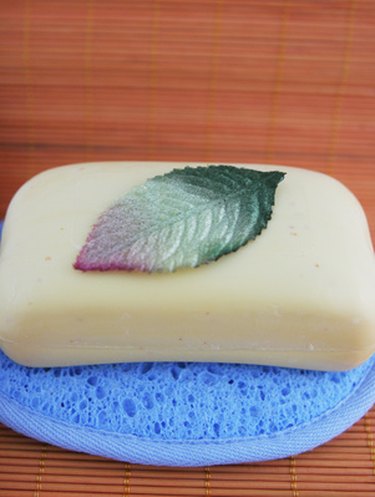
Unmold the soap onto butcher paper, freezer paper or needlepoint screen after 48 hours. It is still caustic so use gloves. Allow to reach the consistency of Swiss cheese. Cut into bars, separate and allow to dry on paper or screen for two or more weeks before using. After 2 weeks, test by washing your hands with the soap. If abrasions on your hands sting, or the skin feels rough and dry, the soap is still too harsh. Allow it to cure another week and re-test. Curing can take up to six weeks.
Tip
Work in a well-ventilated room.
Lining the mold with the trash bag is easier if you slip the mold inside the bag, then smooth it out.
High temperatures are not necessary for most oils. The aim is just to melt any solidified oils and reach 105 degrees, which is only a few degrees higher than your body temperature.
Warning
Wear safety glasses, gloves and protective clothing. Lye is highly caustic and will cause severe chemical burns. Even a few crystals combining with the moisture of your skin can cause a burn. Rinse with cold water immediately if lye or uncured soap solution comes in contact with your skin or eyes. Seek medical attention.
Always pour the water into the lye. Not the other way around.
Do not use glass containers when mixing lye and water. The heat reaction will break the glass.
Do not allow children or pets near lye or uncured soap.
Uncured soap can discolor some surfaces.
Do not pour or spill undiluted soap mixture down the sink, it will harden and block pipes. Wash containers with plenty of water to dilute the soap residue.
Video of the Day