Solid Foods for a 5 Month Old Baby
The American Academy of Pediatrics recommends that a baby is 6 months old before she is introduced to solid food.
Breast milk or formula provides enough nutrition for the first six months, and waiting to introduce solid foods can help prevent allergies and allow the baby's digestive system to mature.
However, some parents choose to introduce some solids between 4-6 months. There are a few grains, fruits and vegetables that are excellent beginner foods because they are gentle on the baby's stomach, offer nutrition and are delicious to a baby's taste buds.
Grains
Rice cereal is a perfect first food. It is bland and unlikely to cause an allergic reaction. For baby's first feeding, mix one tablespoon of the cereal with four to five tablespoons of breast milk or formula.
The cereal will be very runny, but the baby is used to a liquid-only diet, so he will be more likely to eat the cereal from a spoon. Oatmeal cereal or barley are other options.
Easily Digestible Fruits

Breakfast Foods for 9-Month-Old Babies
Learn More
Applesauce or bananas make a good introduction to fruits because they are easily digestible for most children. To make your own applesauce, peel and core the fruit, cut into pieces and steam until soft. Then, blend to desired consistency, adding water if necessary to make the food more like liquid. Bananas are soft as is, so mashing them and mixing them with breast milk or formula will likely be enough; use a food processor if needed to get a smoother consistency.
Easily Digestible Vegetables
Carrots are an excellent choice for the first vegetable. They are naturally sweet and are unlikely to cause an allergic reaction. To make carrots, peel, cut into pieces and steam until soft. Blend to desired consistency and add water if necessary. At first, the baby may need more water to make the puree easy to swallow. After carrots, you can introduce squash and sweet potatoes. Avocados are also a good option; they are easily mashed, and packed with healthy fats.
Introduce Foods Appropriately
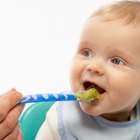
Non-Acidic Foods for Babies
Learn More
To know if a certain food causes an allergic reaction, it is advisable to wait between 2-3 days before introducing a new food. If there is an allergic reaction, stop serving the food and consult the pediatrician.
Follow the baby's cues and don't force him to eat when he doesn't want to. At this point in his development, eating solids is more for experimentation and learning. He is still getting most of his nutrition from breast milk or formula.
Related Articles

Breakfast Foods for 9-Month-Old Babies
Learn More
Non-Acidic Foods for Babies
Learn More
When Can Babies Eat Pasta?
Learn More
How Long Should I Feed My Baby Gerber Cereal for Babies?
Learn More

How to Teach a Baby to Swallow Food
Learn More
Cooking Oats for a Baby
Learn More
How Long to Give a Baby Cereal Before Starting Vegetables?
Learn More

What Foods Can a 7-Month-Old Baby Eat and How Much?
Learn More

Meal Ideas for a Ten Month Old Baby
Learn More

Gerber Stage 1 Baby Food
Learn More
- Healthy Children: Switching to Solid Foods
- "Top 100 Baby Purees"; Annabel Karmel; 2005
- wholesomebabyfood: stage 1 baby food recipes

Sarahlynne Davis has been a professional educator since 2003. She holds a Bachelor of Arts in English and government from Skidmore College, a Master of Education in literacy from the University of San Diego and an English teaching license from Indiana Wesleyan University.
