
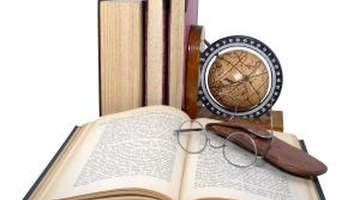
Realia refers to the practice of using real, tangible things in the classroom to help your students connect with English on a different level. It involves visual, tactile and functional methods for teaching ideas, concepts, vocabulary or grammar. It’s also extremely useful to help your students grasp the cultural differences or learn practical skills if they are planning to travel or are already living in an English-speaking country. Many teachers are leery of using realia, but here are some easy and helpful ideas for using it in ESL lessons.
Bring in a number of objects from everyday life, such as fruit, utensils or articles of clothing. Sitting in a circle, pass one of the objects to the student on your left, saying the name of the object (for example: "tomato" or "sock") and then have the student pass on the object to the next one, speaking the word as well. Have your students keep passing on the object, repeating its name, until it comes full circle back to you. You may use photos of the objects instead of the actual objects themselves.
Obtain or make some menus for use in practicing common ordering phrases. Review the phrases with your students, and then divide them into two groups. Now have them role-plays a restaurant scenario using the phrases, with one group as the customers and the second as waiters. Switch the group's roles once the exercise is over. Do the same with a bus or train timetable to role play a train conductor and passengers.
Use an object, such as a ball, to teach prepositions of place like “on, under, above.” Place the ball on the table, and ask where it is. Elicit the reply “It’s on the table,” and so on.
Make photocopies of real maps. Divide the class into groups of two and hand each group a map. Have them use the maps to give each other directions.
Write out an email and send it to each of your students or printout copies and give a copy to each student. Have them write a reply to the email to practice.
Write or print out recipes for work on the imperative. Read out the step by step recipe instructions and have the students mime them as you read them out.
Bring in photographs to practice description, prepositions of place or modals of deduction. Pair up your students and have them describe their photographs to each other.
Tip
Prepare your materials and supplies before the lesson. Purchase all the necessary supplies beforehand, rather than wait until the last minute to go shopping for them.
Tip
Make all photocopies necessary or cut flashcards. Organize these into envelopes. If you’re using clothing, pack them into a bag the night before.
Related Articles




Tips
- Prepare your materials and supplies before the lesson. Purchase all the necessary supplies beforehand, rather than wait until the last minute to go shopping for them.
- Make all photocopies necessary or cut flashcards. Organize these into envelopes. If you’re using clothing, pack them into a bag the night before.
Writer Bio
This article was written by the CareerTrend team, copy edited and fact checked through a multi-point auditing system, in efforts to ensure our readers only receive the best information. To submit your questions or ideas, or to simply learn more about CareerTrend, contact us [here](http://careertrend.com/about-us).