This Season
 

How to Identify the Yellow Rat Snake

How to Identify the Yellow Rat Snakethumbnail
The Yellow Rat Snake

The yellow rat snake is one of the most popular snakes for people to own as pets, so finding and identifying them in the wild is common. Though they are harmless as far as venom, they are sometimes feisty biters in the wild. Identifying the yellow rat snake in the wild can be somewhat challenging because they vary in color. This is due to age, location and various other climate issues. If you know what to look for, you can identify the yellow rat snake in the wild and have a wonderful pet.

Related Searches:
    Difficulty:
    Moderately Easy

    Instructions

      • 1

        Know the regions in which you might find a yellow rat snake. The yellow rat snake is found throughout the southeastern portion of the United States from southern South Carolina to the very tip of Florida. They are quite common throughout their range, though secretive in nature.

      • 2

        Look in woodlands and around farming areas for the yellow rat snake. A farm is a perfect place to locate yellow rat snakes. As the name implies, they are notorious rat hunters. For this reason, farmers are happy to have them around for vermin control purposes.

      • 3

        Realize that the yellow rat snake is the southern version of the black rat snake found in the north. They are generally the same snake, but with different colors and locations. However, the black rat snake found in the north is often a bit larger.

      • 4

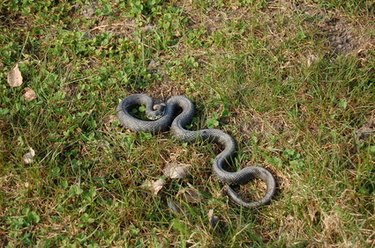
        Observe the yellow rat snake's various pigments. The yellow rat snake often does appear yellow, but may also be a light brown, or any shade in between. Some even seem to have a greenish tint to them. They also sport four lines running down the length of their bodies that are most commonly brown. As youngsters, these lines are often replaced with blotches of the same color instead.

      • 5

        Notice the yellow rat snake's powerfully built, constrictor body. The yellow rat snake is thin, but very strong. Often, this snake will grow to 5 feet or more, and the coils are used to squeeze its prey. Once the prey is dead, the yellow rat snake will swallow it head first.

      • 6

        Observe that the eyes of the yellow rat snake are often the same color as the rest of its body.

    Tips & Warnings

    • If you find a yellow rat snake around your home, leave it be. It is a great natural exterminator.

    • Always get an informed opinion about a yellow rat snake before trying to retrieve it.

    • If bitten by a yellow rat snake, make sure to get it checked out. Yellow rat snakes are not venomous, but any wild animal bite can be a problem due to possible infection.

    Related Searches

    • Photo Credit Wikipedia Commons Public Domain Via LtShears

    Read Next:

    Comments

    You May Also Like

    • Yellow Snakes in Maryland

      A total of 27 types of snakes call Maryland home, according to Maryland's Department of Natural Resources. All but two types are...

    • Types of Black & Yellow Snakes

      Thousands of species of snake exist, coming in a range of sizes, types and colorings. Being able to identify a species of...

    • Rat Snake Characteristics

      The rat snake is a nonvenomous, North American snake species. Three subspecies of rat snakes exist: the black, gray and yellow varieties....

    • Nonpoisonous Snakes in South Carolina

      South Carolina provides balmy temperatures throughout most of the year, which enables all 38 of South Carolina's native snake species to warm...

    • How to Spot a Black Rat Snake

      The black rat snake (Elaphe obsolete) is also known as a pilot black snake or simply a black snake. It prefers heavily...

    • How to Identify a Rat Snake

      Rat snakes are found throughout the eastern United States and have a highly variable color pattern. Rat snakes are found from Florida...

    • Yellow & Red Snakes in Florida

      Florida is home to dozens of species of snakes, both indigenous and introduced. They are found in all regions of the state,...

    • Facts on Black Rat Snakes

      Black rat snakes are carnivorous reptiles native to eastern parts of North America. Although these snakes are skillful hunters of small animals,...

    • Corn Snake Safety

      Corn snakes are not generally dangerous, but safety is important. Learn how to be safe around corn snakes in this free pet...

    • How to Identify Brown Rats

      Brown rats ("Rattus norvegicus") are also known as Norwegian rats, Norway rats, gray rats, sewer rats or wharf rats. Brown rats can...

    • Black Snakes With Yellow Spots in Tennessee

      Speckled king snakes and black king snakes -- two subspecies of the common king snake -- are the only two snakes native...

    • What Kind of Snake Is Yellow and Green?

      Yellow and green snakes are found all over the world and most likely have their coloring because they're found in grass or...

    • What Colors Are Snakes?

      Snakes are found on nearly every continent in the world in an array of colors. Sometimes those colors are vibrant, while for...

    • Mississippi Rat Snakes

      The black rat snake and corn snake are two nonvenomous reptiles native to Mississippi. Both species belong in the Elaphe genus of...

    • Indigenous Snakes of South Carolina

      The state of South Carolina's subtropical climate, humidity and mild winters make it a hospitable geographic location for many different snake species....

    • Identifying Snakes

      Whether you have a passion for snakes or an aversion for them, being able to identify snakes is important if you enjoy...

    • Rat Snakes in Arizona

      Rat snakes get their name from their penchant for eating rats, and they are relatively harmless to humans. Arizona is currently home...

    • How to Care for a Red Rat Snake

      Red rat snakes, sometimes referred to as corn snakes, feature brownish-gray or peach bodies with thick, red rings. Average red rat snakes...

    • Black & Yellow Snakes in South Carolina

      Snakes strike fear in the heart of many, but most of the 42 species of snakes found in South Carolina are harmless,...

    Follow eHow

    Related Ads